
Modi Breaks Protocol for Putin as Russia Signals No Interest in Real Ukraine Peace Talks
As it has done repeatedly in recent weeks, Russia has once again made it clear that it has no real intention of beginning meaningful peace negotiations over Ukraine. Yet, at the same time, Russian President Vladimir Putin received a red-carpet welcome in New Delhi.
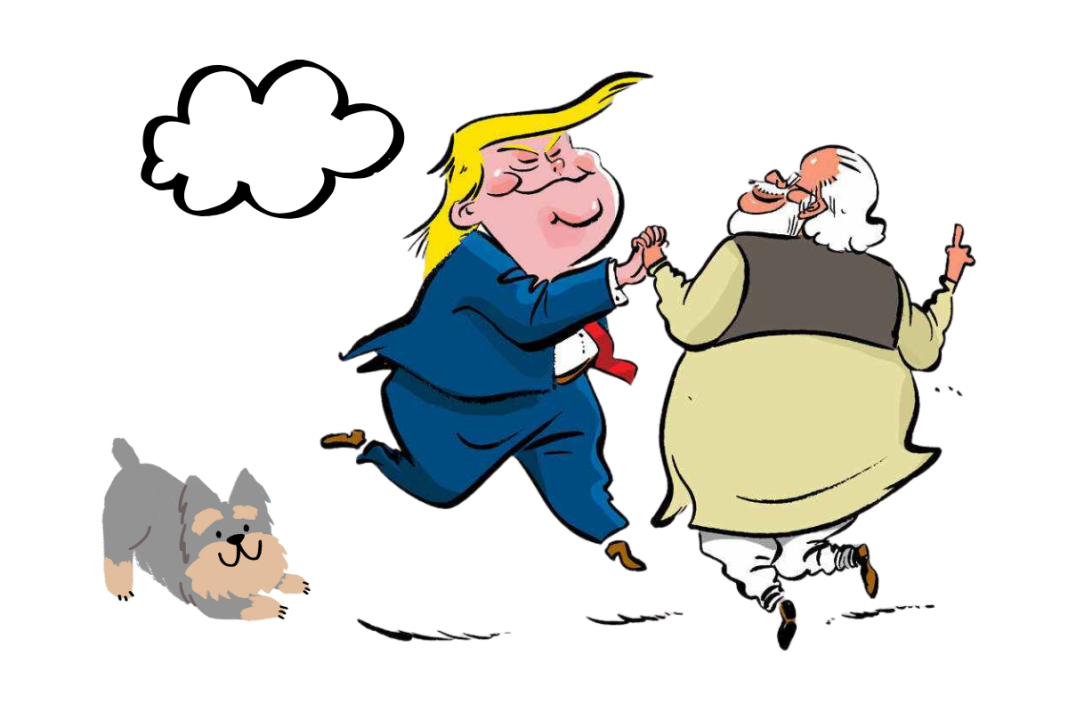
On Thursday, Indian Prime Minister Narendra Modi broke diplomatic protocol by personally greeting Putin on the airport runway with a handshake and a warm embrace. The scene sent a powerful message: Russia is far from politically isolated in many key regions of the world. It also allowed India, amid growing tensions with the United States, to visibly demonstrate its strategic independence.
Trump’s Pressure on India and Rising Tensions
U.S. President Donald Trump has imposed a 50 percent tariff on Indian goods, one of the highest rates in the world, citing India’s continued purchase of Russian oil. U.S. trade adviser Peter Navarro went even further by calling Russia’s ongoing war in Ukraine “Modi’s war,” pointing to India’s massive increase in imports of Russian oil.
Previously, only 0.2 percent of India’s oil came from Russia. Today, that figure has surged to nearly 40 percent. According to Navarro, “the road to peace partially runs through New Delhi.”
Major Differences Still Divide India and the United States
While India and the U.S. are negotiating a trade deal, significant tensions persist on several fronts:
- Trade Policy: Disagreements over tariffs, market access, and protectionist measures.
- H-1B Visas: U.S. restrictions on these skilled worker visas, crucial for Indian tech professionals, are a major irritant.
- Pakistan: Differing strategic approaches to Pakistan, which the U.S. sees as key to Afghanistan but India views as a state sponsor of terrorism.
- Potential “G-2” with China: The concept of a U.S.-China direct partnership alarms India, as it would undermine its role as a key U.S. strategic counterbalance to China in the Indo-Pacific.
These issues, especially the “G-2” idea, threaten to destabilize the foundational U.S. strategy of partnering with India to counter Chinese influence.
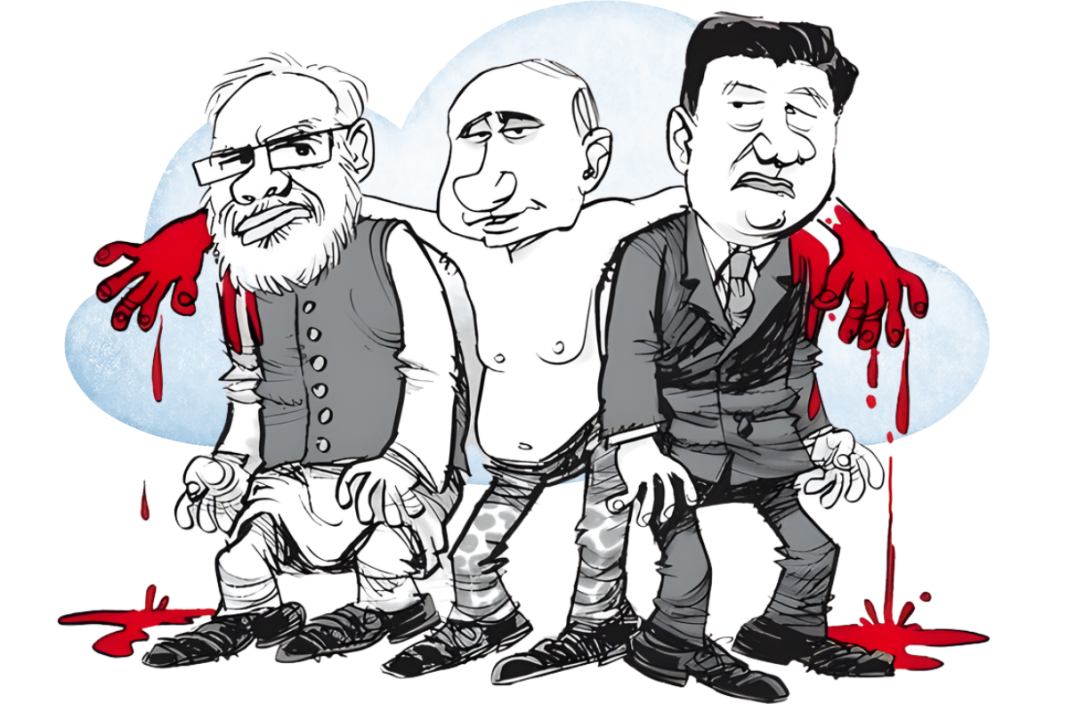
Washington’s increasingly narrow and rigid approach toward New Delhi became further evident not only through Putin’s current visit, but also last September at the Shanghai Cooperation Summit in Tianjin, where Modi warmly shook hands with both Putin and Xi Jinping.
Political Pressure on Modi at Home
In recent months, Trump and several of his senior advisers have openly criticized India, creating domestic political pressure for Modi and reopening debates about India’s growing closeness to Washington over the past two decades.
While the United States may take some comfort in the existing limits of India–Russia cooperation, Putin’s visit sends a clear warning to the Trump administration: its current strategy toward India is unlikely to succeed.
Based on the official statements and reports from President Putin’s visit to India, the talks focused on advancing practical cooperation across all the areas you mentioned. This occurred against a backdrop of geopolitical pressures and a strategic rebalancing of the long-standing India-Russia partnership.
The table below summarizes the key outcomes for each agenda item you listed, along with the broader geopolitical context.
| Agenda Item | Key Visit Outcomes & Agreements | Geopolitical Context & Challenges |
|---|---|---|
| Energy Cooperation | Vowed uninterrupted oil/fuel supply; Advanced plans for a second nuclear power plant site; Agreed on long-term fertilizer supply. | Defying U.S. pressure and tariffs. U.S. sanctions on Russian oil firms are causing short-term import declines. |
| Defense | Reorienting toward joint R&D and co-production; Agreed to jointly manufacture spare parts in India. | Diversification by India has reduced Russia’s share of its arms imports from 72% (2010-14) to ~36% (2020-24). Russia’s wartime production focus limits capacity. |
| Civil Aviation & Critical Minerals | Included in the broad “Programme 2030” for economic cooperation. Critical minerals were noted as key for secure, diversified global supply chains. | Part of the effort to diversify trade beyond oil and arms and make the economic relationship more balanced and sustainable. |
| Investment Projects & Labor Migration | Adopted “Programme for Economic Cooperation until 2030” with a $100B trade target; Signed agreements on temporary labor activity and combating irregular migration. | Aims to fix a huge trade imbalance (India’s imports from Russia were ~$64B vs. exports of ~$5B in FY25). Labor migration helps address Russia’s worker shortfall. |
The Bottom Line on the Partnership
The summit’s core message was one of resilience and adaptation. Both leaders framed their “Special and Privileged Strategic Partnership” as stable despite global turbulence. In practice, the relationship is undergoing a significant shift:
- From Buyer-Seller to Co-Developer: This is most evident in defense, moving away from simple purchases toward joint manufacturing and technology sharing.
- Broadening the Economic Base: With energy trade under external pressure and defense sales slowing, both countries are pushing hard to build new pillars of cooperation in trade, investment, and connectivity.
This visit confirms India’s continued commitment to its strategic autonomy, maintaining a key partnership with Russia even as it navigates complex relations with the West.
Economics Takes Priority Over Defense
This is why trade and economics dominated Putin’s visit. At a joint press conference on Friday (December 5), Putin and Modi announced an economic cooperation roadmap through 2030.
Much of the record bilateral trade volume is tied directly to oil—and that may soon decline. After the United States imposed sanctions on Rosneft and Lukoil, Russia’s two largest oil companies, this trade is expected to fall significantly.
India’s major refineries have already suspended new purchases of Russian oil. Meanwhile, because bilateral trade heavily favors Russia, India is now demanding greater market access, especially for:
- Pharmaceuticals
- Machinery
- Agricultural products
Putin pledged to ensure “uninterrupted energy supplies” to support India’s economic growth.
A Symbolic Visit More Than a Breakthrough
In many ways, Putin’s visit appears more symbolic than substantive. No major new defense deals were signed. Agreements on critical minerals, civil nuclear power, and shipbuilding were reached, but their impact remains limited compared to current oil trade.
Modi carefully reaffirmed that India is not neutral on the Ukraine–Russia war and stands “on the side of peace.”
The Modernization of the India-Russia Partnership
The summit shows this partnership is evolving from its 20th-century model into something new:
- Beyond Arms & Oil: While securing spare parts for existing Russian equipment is crucial, the new focus is on co-development and co-production, like manufacturing drones together. This mirrors India’s “Make in India” goals with Western partners but allows it to retain leverage and diversify sources.
- Strategic Hedging: Even as Russia remains India’s top arms supplier by volume, its share has halved as India actively diversifies with purchases from the U.S., France, and Israel. This diversification is a form of hedging, ensuring no single country can exert overwhelming leverage.
- Economic Rebalancing: The new goal of $100 billion in trade and cooperation on critical minerals, nuclear energy, and connectivity corridors is an attempt to build a broader, more sustainable economic foundation that isn’t solely reliant on discounted oil.
What This Means for U.S.-India Relations
India’s actions are not a rejection of the U.S. partnership but a signal of its parameters:
- Transactional Diplomacy Has Limits: As your initial query noted, friction over trade, visas, and the U.S. approach to Pakistan creates hesitation. Deepening ties with Russia reminds the U.S. that a purely transactional approach risks pushing India toward other partners.
- India Will Set Its Own Priorities: Whether it’s continuing energy imports from Russia amidst sanctions or pursuing joint defense projects, India will make decisions based on its national interest, not solely to align with a U.S.-led bloc.
- The China Calculus is Key: The U.S. view of India as a counterbalance to China remains the strongest pillar of the relationship. India’s engagement with Russia signals it will address the China challenge on its own terms, using all available partnerships.
Ultimately, for the U.S., India’s relationship with Russia is a reminder that its partnership with New Delhi will be on mutually agreed terms, not a replication of its traditional alliances.