
The Price America Will Pay for Pushing India Away
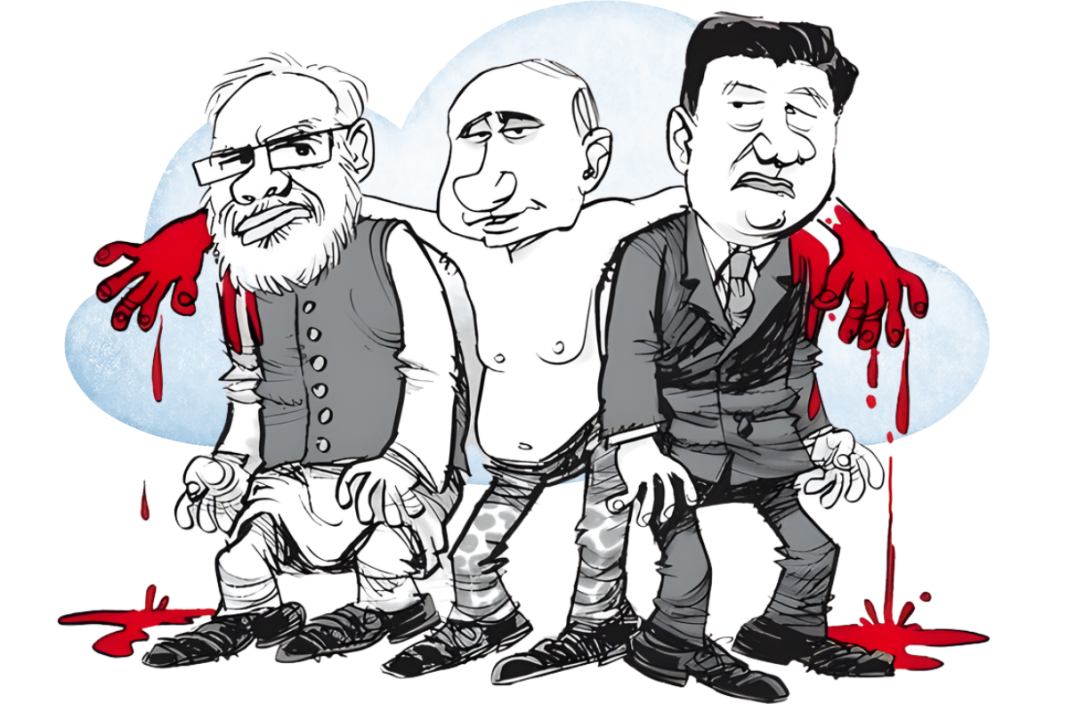
At a moment when U.S. policy toward India appears openly punitive, the warm welcome given to Russian President Vladimir Putin in New Delhi by Prime Minister Narendra Modi carries deep political meaning.
Modi’s message was simple and firm: India is a sovereign power. It will not be forced to choose sides in a “West versus the rest of the world” conflict. India, he made clear, will follow its own independent path in global politics.
Pillars of India’s Strategic Value to the U.S.
The partnership rests on several interconnected pillars:
- Geographic & Military Balancing Act: India’s position dominates the Indian Ocean, through which a massive volume of global trade flows. A strong India with a modern navy (which the U.S. helps build through exercises and technology sharing) can help ensure these sea lanes remain open and secure, directly countering China’s expanding naval presence from the South China Sea to the Horn of Africa.
- Democratic Counter-narrative: As the world’s two largest democracies, the U.S. and India offer a governance alternative to China’s authoritarian model. Their partnership, despite flaws and disagreements, is framed as a alliance of free nations upholding a “rules-based international order” in the Indo-Pacific.
- Economic & Technological Decoupling: The U.S. sees India as a crucial future partner in building resilient, China-independent supply chains. Initiatives like the U.S.-India Initiative on Critical and Emerging Technology (iCET) aim to co-develop tech in AI, quantum computing, and semiconductors, while U.S. companies increasingly view “China+1” diversification strategies with India as the “+1”.
The Evolution and Delicate Balance
This partnership is not without its tensions, precisely because of India’s commitment to strategic autonomy:
- From Distrust to Alignment: The relationship has transformed dramatically since India’s 1998 nuclear tests, which triggered U.S. sanctions. Today, foundational defense agreements like COMCASA and BECA enable unprecedented interoperability between their militaries.
- Managing Disagreements: As your earlier points noted, the U.S. tolerates, albeit uneasily, India’s continued defense and energy ties with Russia. This is viewed as a legacy dependency and a necessary compromise to secure the larger strategic prize: a strong India aligned with Western interests in the long term.
- The “Quad” as a Mechanism: The Quadrilateral Security Dialogue (Quad) with Japan and Australia is a key, flexible platform to deepen U.S.-India coordination without a formal alliance. It focuses on non-military areas like vaccine diplomacy, infrastructure, and climate to present a positive, alternative vision for the region.
In essence, the U.S. prioritizes India not because they agree on everything, but because no other country combines India’s geographic scale, democratic system, economic potential, and inherent strategic friction with China. India’s value lies in its independent power, which the U.S. seeks to cautiously align with its own Indo-Pacific objectives.
How U.S.–India Cooperation Deepened
Since the time of President George W. Bush, U.S. policymakers have understood that India is essential to maintaining balance in the Indo-Pacific region.
This was not just talk. Over the past decade, U.S.–India defense cooperation has grown fast. Military coordination, intelligence sharing, and technology cooperation have all expanded.
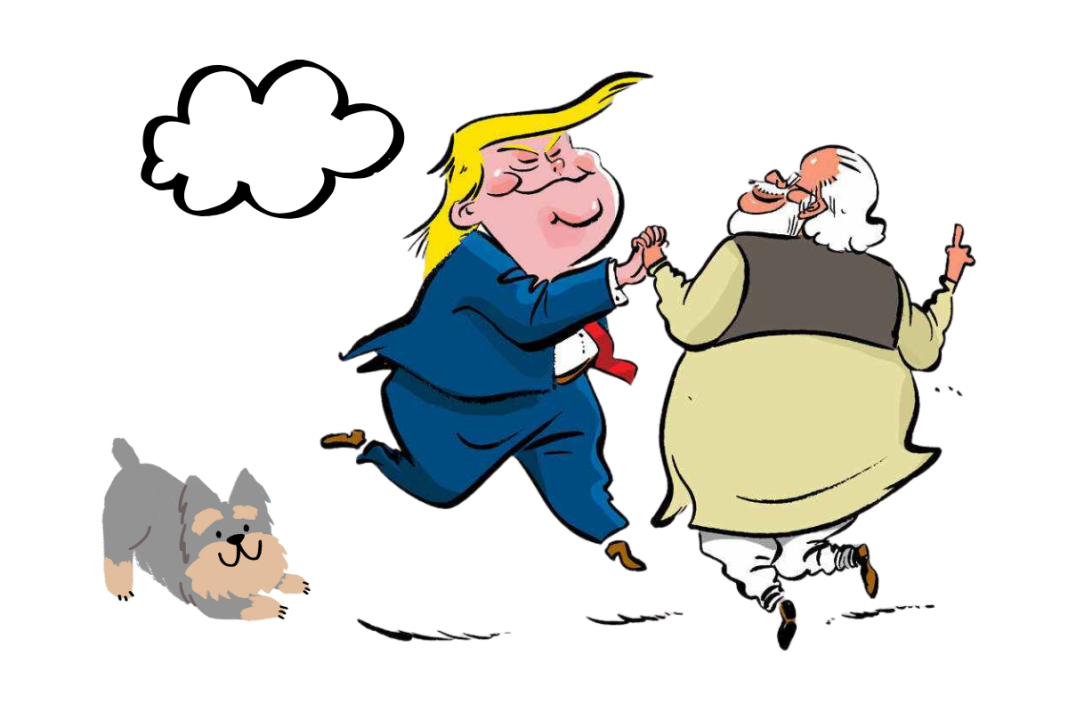
Much of this progress continued during Donald Trump’s first term, when pressure on China increased and security support to Pakistan was reduced. As a result, India became the center of America’s Indo-Pacific strategy.
Today, India conducts more joint military exercises with the U.S. than with any other country. The United States is now India’s largest trading partner.


Growing Distrust Between Washington and New Delhi
Despite this progress, the United States has often ignored India’s core interests. After Russia launched its full-scale war in Ukraine, Washington expected full obedience from India in applying sanctions. But India refused to follow blindly. Instead, it increased its imports of cheap Russian oil.
India viewed the Ukraine war as a distant conflict and chose not to risk its own economic interests. This decision became even more logical when India saw China buying Russian energy at low prices.
Old Fears Return Through Pakistan
India’s doubts about the U.S. deepened further in 2022. The Biden administration helped Pakistan secure IMF loans and later approved a $450 million deal to upgrade U.S.-made F-16 fighter jets for Pakistan.
For India, this revived painful Cold War memories when Pakistan was heavily armed by the U.S.
Trump later strengthened ties with Pakistan even more. One major reason, many analysts believe, was personal financial interest, clearly seen in a profitable cryptocurrency deal in April 2024.
Sanctions, Oil, and China’s Growing Power
India had seen this pattern before. In 2019, when Trump re-imposed harsh sanctions on Iran, India lost one of its cheapest and most reliable energy suppliers. China quickly stepped in and bought Iranian oil at very low prices while expanding its security influence there.
The same thing happened after sanctions on Russia. By cutting off Western markets, the sanctions pushed Russia closer to China. China strengthened land energy routes from Russia and ensured steady fuel supply even during crises.


This gave China strategic confidence—especially regarding Taiwan. Such developments directly threaten India’s long-term security interests. This time, however, India also took advantage of cheaper Russian oil.
Trump’s Economic Punishment of India
The Trump administration did not take India’s oil policy lightly. It imposed an additional 25 percent tariff on Indian exports, pushing total tariffs to 50 percent. It also threatened secondary sanctions, accusing India of helping Russia.
Yet Trump gave special exemptions to other major buyers of Russian energy. Hungary, for example, was spared because its leader Viktor Orbán is a close Trump ally.
As a result, U.S. tariffs on Indian exports are now higher than even those placed on China. In effect, America has launched a form of economic war against India.
America’s Contradiction
Washington says India is “essential.” But in reality, U.S. actions are hurting India’s economy, regional security, and strategic freedom.
America wants India to be a strong pillar in its Indo-Pacific strategy—yet its own policies are weakening that very pillar.
Why India Is Turning to Other Partners
Even though Trump’s foreign policy is unstable, the broader American approach has remained the same across administrations. This has made India increasingly frustrated and distrustful.
As a result, India is now focusing on strengthening its own capabilities and building alternative partnerships. Russia is the starting point of that strategy.
Putin’s Delhi visit should serve as a serious warning to Washington. Pressure and punishment will only weaken the relationship further.
The Strategic Reality for the United States
To contain China’s aggressive rise, the United States has very few effective options left. One of the most important is a flexible, interest-based partnership with India.
From that perspective, a hard truth emerges:
America needs India more than India needs America.
Instead of trying to force India to “follow the line,” the U.S. must treat India as an equal partner—accepting it as it is, not as Washington wishes it to be.
India’s pursuit of strategic partnerships beyond the United States is a deliberate and calculated response to what it perceives as persistent friction and conditional engagement from Washington. As you’ve noted, this approach begins with Russia but extends far beyond it. The 2025 Putin-Modi summit serves as a powerful symbol of this policy shift, demonstrating India’s resolve to diversify its international ties in pursuit of its core national interests: strategic autonomy, national security, and economic growth.
The Roots of Indian Frustration with the U.S.
Despite a clear strategic convergence on countering China, the partnership with the U.S. has been marked by recurring points of tension that have eroded trust and driven India to seek alternatives.
- Inconsistent Strategic Support: While the U.S. views India as a vital counterbalance to China, India perceives American policy in its immediate neighborhood as often undermining its security. Washington’s relationship with Pakistan remains a profound irritant. Furthermore, the historical U.S. reluctance to share critical defense technology contrasts sharply with offers from other partners. The concept of a U.S.-China “G-2” partnership, which you mentioned, is viewed in New Delhi as a potential betrayal, risking India’s strategic marginalization.
- Coercive Economic Policies: Recent U.S. actions are seen as punitive and destabilizing. The imposition of tariffs on Indian exports and hikes in H-1B visa fees are viewed as direct economic pressure, particularly on key Indian sectors. Experts note these tariffs have been justified by U.S. officials partly due to India’s continued imports of Russian oil, directly linking trade policy to geopolitical compliance. In response, India has devalued the rupee to boost export competitiveness and fast-tracked domestic trade facilitation schemes.
- The Burden of “Values-Based” Diplomacy: India has consistently rejected Western criticism of its domestic policies or its stance on the Ukraine war, viewing it as moralistic interference. Participation in military exercises like “Zapad-2025” with Russia, despite Western condemnation, is a pointed assertion of India’s right to an independent foreign policy. This resistance to external pressure is a fundamental tenet of its strategic autonomy.
Russia: The Pivot Point for Diversification
As you correctly identified, Russia is the historical and strategic starting point for India’s diversification. The 2025 summit was not merely symbolic but a concrete effort to modernize a time-tested partnership for a new geopolitical era.
The table below illustrates how the India-Russia relationship is being reshaped across critical domains:
This transition shows India is not merely leaning on an old ally but actively repurposing the partnership to serve its contemporary goals of military indigenization and economic resilience.
Beyond Russia: Building a Multipolar Network
India’s outreach extends globally, building a web of relationships that dilute dependency on any single power.
- Deepening Ties with Middle Powers & Europe: India is actively securing its own trade agreements to counter U.S. protectionism. The 2025 UK-India Free Trade Agreement (FTA) and the Trade and Economic Partnership Agreement (TEPA) with EFTA states (Switzerland, Norway, Iceland, Liechtenstein) are prime examples. The latter promises $100 billion in investment and 1 million Indian jobs. With the Gulf states, cooperation is moving beyond energy to strategic investment and serving as a bridge to bypass U.S. tariff walls.
- “Make-in-India” as a Strategic Tool: The drive for defense self-reliance is central. India is not just importing but now exporting defense goods like BrahMos missiles to the Philippines, using arms sales as a tool of diplomatic influence. It is also playing competing partners against each other—evaluating fighter jet offers from the U.S. (F-35), Russia (Su-57), and the UK (Eurofighter Typhoon) to secure the best possible technology transfer terms.
- Navigating the China Challenge: This complex network also serves to manage relations with Beijing. Partnerships with Vietnam, Japan, and Australia through the Quad provide strategic depth in the Indo-Pacific. Simultaneously, India engages with China in forums like BRICS and the SCO, where it recently secured a joint condemnation of cross-border terrorism—a direct reference to Pakistan. This multi-vector approach allows India to counter Chinese assertiveness while avoiding a costly all-out confrontation.
The Clear Warning to Washington
The Putin visit and India’s broader diversification constitute an unambiguous signal to the United States, affirming your observation that pressure is counterproductive.
- Strategic Autonomy is Non-Negotiable: India has demonstrated it will absorb short-term criticism and economic cost to preserve its freedom of action. It will not be a treaty ally or accept a subordinate role. A partnership that demands India sever its defense, energy, and diplomatic ties with other nations, like Russia, is a non-starter.
- The High Cost of Coercion: U.S. policies perceived as punitive—tariffs, sanctions threats, public criticism—directly fuel India’s drive for alternatives. They validate the argument made by Indian strategists that over-reliance on the West is risky. As one analysis of the Putin visit noted, the U.S. now faces a dilemma: confront India and risk alienating it, or recalibrate its strategy to compete for partnership rather than demand compliance.
- The Need for a New Framework: The current U.S. approach, which compartmentalizes security cooperation from trade disputes and moral diplomacy, is unsustainable. The 10-year defense framework signed in 2025 is seen as “evolutionary, not revolutionary”. For the partnership to reach its potential, the U.S. must offer a more consistent, respectful, and holistic engagement that acknowledges India’s need for strategic options, technology access, and its own great-power aspirations.
In conclusion, India is not turning away from the United States but decisively turning toward its own interests. It is building a multi-aligned network of partnerships—with Russia as a core, resilient partner, and with middle powers in Europe, the Gulf, and the Indo-Pacific—to ensure its security, growth, and autonomy. For Washington, the message is clear: a partnership based on mutual respect and convergent interests is possible, but one predicated on pressure and unilateral demand is doomed to underdeliver. The future of the relationship depends on America’s ability to internalize this lesson.