
A Modern-Day Land Rush?
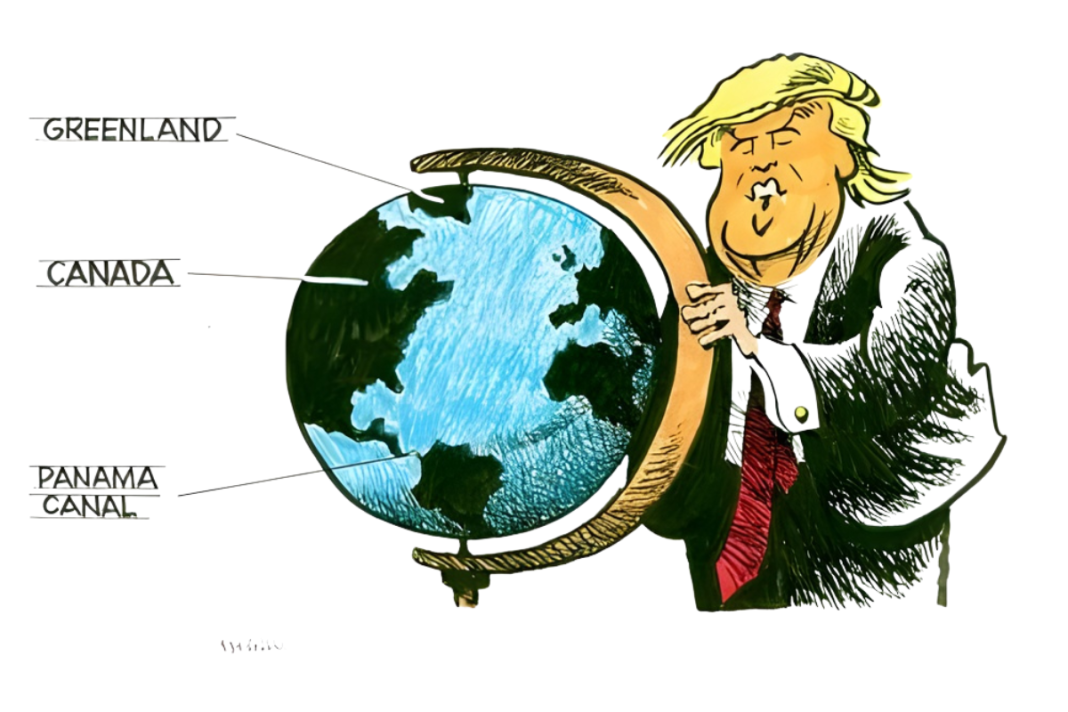
Imagine a world leader, not from the 19th century, but from the 21st, openly discussing the purchase of an entire country like it was a prime piece of real estate. This isn’t fiction. Since returning to the White House, President Donald Trump has reignited a shocking ambition: to acquire Greenland. He has declared that the United States will do “something” about the island, whether its people like it or not, warning that if America doesn’t take it, Russia or China will. This isn’t just offhand talk; it’s a stated goal, backed by threats of “strong measures.”
The world watches, bewildered. How, in the modern age of diplomacy and international law, could a U.S. President believe he can take control of a self-governing territory of Denmark, a staunch NATO ally? This blog dives deep into the unprecedented “hard power” options on Trump’s table, the explosive historical echoes, and the earth-shattering consequences of such a gamble.
Chapter 1: The Allure of Greenland – Why Trump is “Desperate”
To understand the “why,” we must look at Greenland through the eyes of Trump’s stated “America First” doctrine: a doctrine of strategic dominance and economic gain.
1.1 The Ultimate Military Chess Piece
Greenland is not just ice. It is the world’s largest geopolitical aircraft carrier. Positioned between North America and Europe, it dominates the North Atlantic and the increasingly strategic Arctic. Trump’s fear, often repeated, is that Russia or China will establish a foothold there, bringing hostile powers to America’s “neighborhood.” The logic is simple: control Greenland, and you control the air and sea corridors between two continents. You can place advanced radar, missile systems, and intelligence posts that make the U.S. mainland virtually untouchable from the north.
1.2 A Treasure Chest of Resources Beneath the Ice
Beneath Greenland’s melting ice sheets lies a modern-day El Dorado. Scientists believe it holds some of the planet’s largest untapped reserves of rare earth minerals—elements critical for everything from smartphones and electric cars to fighter jets and missile guidance systems. Currently, the world relies heavily on China for these minerals. Controlling Greenland would shatter that dependency and hand the U.S. a massive economic and technological advantage. There’s also strong evidence of vast oil and natural gas deposits. For an administration focused on energy dominance, this is an irresistible prize.
1.3 The Historical Ghost: A Legacy of “Manifest Destiny”
Trump’s desire taps into a deep, old American impulse. The U.S. grew from 13 colonies to a continental power through purchase and expansion. The Louisiana Purchase (1803) and the Alaska Purchase (1867) are celebrated as masterstrokes of diplomacy that secured America’s future. In Trump’s view, Greenland is the next logical “deal” in this sequence—a final piece to secure the “continental unity” of North America. He sees himself not as a radical, but as the latest in a line of visionary leaders who expanded American territory through bold transactions.
Chapter 2: The “Hard Power” Playbook – From Cash to Conquest
So, what could Trump actually do? His advisors are reportedly exploring a spectrum of options, from financial seduction to outright force.
2.1 Option 1: The “Greenland Buyout” – Bribing a Population
The most discussed “soft” option is a direct financial offer, not just to Denmark, but to the 56,000 people of Greenland. Reports suggest White House officials have debated offering each Greenlander between $10,000 and $100,000 to vote for independence from Denmark and union with the U.S.
- The Math: At $100,000 per person, the total price tag would be $5.6 billion. For context, the U.S. military budget is over $800 billion per year. In Trump’s calculus, this could be a bargain.
- The Problem: This plan wildly misunderstands Greenlandic society. A 2025 poll showed about 85% of Greenlanders reject the idea of becoming part of the U.S. Their identity is tied to their Inuit heritage and their path toward eventual independence, not becoming a U.S. territory like Puerto Rico. As economist Jeffrey Sachs stated, “Trump thinks he can buy Greenland cheap… This is an insult and a threat to the sovereignty of Denmark and Europe.”
2.2 Option 2: The Forced “Purchase” – Leveraging Overwhelming Pressure
History shows the U.S. has bought land from Denmark before. In 1917, it purchased the Danish West Indies (now the U.S. Virgin Islands) for $25 million in gold. Could Trump force a similar “deal”?
- The Tactics: He could unleash crippling economic sanctions on Denmark, threaten to withdraw from NATO, or leverage other diplomatic nuclear options to coerce Copenhagen to the table. He could bypass the Danish government entirely and try to cut a deal with Greenland’s local parliament, the Inatsisartut, promising massive investment and autonomy.
- The Iron Wall: Both Copenhagen and Nuuk (Greenland’s capital) have stated, repeatedly and unanimously, that the island is “not for sale.” For Denmark, selling citizens and territory is an unconscionable act of modern imperialism. For Greenland, it would be a betrayal of their century-long journey toward self-rule. This option would require breaking the will of two democratic governments, creating a crisis of legitimacy.
2.3 Option 3: The “Compact” Workaround – A Legal Loophole?
A more obscure idea floating in policy circles is a “Compact of Free Association” (COFA). The U.S. has such agreements with Pacific nations like the Marshall Islands and Palau. In exchange for full responsibility for their defense and security, the U.S. provides economic aid and the right for their citizens to live and work in America.
- The Catch: For Greenland to enter such a compact, it would first have to become a fully independent, sovereign state, completely separating from Denmark. The U.S. would then, in effect, become its military and economic patron, gaining de facto control over its foreign policy and security—the very prize Trump seeks—without a formal “purchase.”
- The Reality: This is a long, convoluted, and uncertain legal path. It requires Greenland to choose independence and then choose subordination to Washington over partnership with Copenhagen or others. It is a slow-motion strategy, unlikely to satisfy an administration seeking a quick, headline-grabbing “win.”
2.4 Option 4: The Unthinkable – Military Action and “Liberation”
This is the darkest scenario, but one the White House has refused to rule out. The logic would mirror interventions like Panama (1989) or the recent failed attempt to seize Venezuela’s President Maduro: a swift, surgical military operation to “secure” the island.
- The Military Advantage: The U.S. already has a massive head start. Since a 1951 defense agreement, America has operated the Pituffik Space Base (formerly Thule Air Base) in northwestern Greenland. It houses hundreds of U.S. troops (Air Force, Space Force) and is critical for missile warning and space surveillance. Danish law doesn’t even fully apply there. The tiny Danish military presence in Greenland (a few dozen personnel for surveillance and rescue) would be utterly overwhelmed. A surprise takeover could be bloodless and quick.
- The Catastrophic Aftermath: This act would be the end of the Western alliance. Attacking the territory of Denmark, a founding NATO member, would be an act of war against an ally. It would instantly and irreparably shatter NATO. Article 5, the collective defense clause, would be invoked against the United States. Europe would unite in horror and sanctions. The U.S. would become a global pariah, a rogue superpower that attacks its friends. Russia and China would be handed the greatest propaganda victory of the century, proof of American imperialism.
Chapter 3: Lessons from History – America’s Long Obsession with Greenland
Trump’s fixation is not new; it’s a recurring fever in American strategic thought.
- 1867-1868: Just after buying Alaska, Secretary of State William H. Seward—the architect of American expansion—inquired about buying Greenland and Iceland. He saw them as completing America’s northern shield.
- 1910: A bizarre tripartite proposal was floated where the U.S. would get Greenland, Denmark would get parts of the U.S.-held Philippines, and Germany would give back North Schleswig to Denmark. It went nowhere.
- 1946: In the dawn of the Cold War, President Harry Truman formally offered Denmark $100 million in gold for Greenland. Fearful of Soviet expansion into the Arctic, the U.S. wanted permanent control. Denmark, grateful for its liberation from Nazi Germany but fiercely protective of its sovereignty, flatly refused.
Each attempt failed for the same reason: Danish sovereignty and the will of the Greenlandic people are not commodities. Trump is the latest, and most blunt, in a line of American leaders who have viewed the map as a Monopoly board, only to be reminded that nations are not properties.
Chapter 4: The Inescapable Conclusion – A Gamble That Would Break the World
The “hard power” playbook for Greenland is a menu of catastrophic options.
- The “Buyout” insults human dignity and would fail.
- The Forced Purchase destroys alliances and the rule of law.
- The Military Option unleashes chaos and ends the post-World War II world order.
The pursuit itself has already done damage. It has humiliated a loyal ally, frightened the people of Greenland, and signaled to the world that the U.S. views treaties and sovereignty as inconveniences. It has, ironically, made Greenland more interested in partnerships with the very powers Trump fears—China and the EU—as a counterbalance to American unpredictability.
The tragic irony is that the U.S. already enjoys nearly everything it wants from Greenland: critical military access through Pituffik, a cooperative ally in Denmark, and a stable partner in the Arctic Council. Trump’s “hard power” dreams risk all of that for the illusion of total control.
In the end, the story of Trump and Greenland is a stress test for the modern world. It asks whether the powerful can still simply take what they want. The answer, if history and the courage of small nations are any guide, must be a resounding no. The price of that “yes” would be a world plunged back into an age where strength makes right, and no nation, no matter how small or how loyal, is safe from its friends.