
No Easy War: Why Military Action Against Iran Risks Repeating America’s Worst Mistakes
For decades, the United States has struggled with a recurring dilemma: how to respond when authoritarian governments violently suppress their own people. Iran is now the latest case where moral outrage, political pressure, and military power collide—yet history offers a clear warning. There are moments when force seems tempting, even necessary, but rarely has it delivered the freedom it promised.
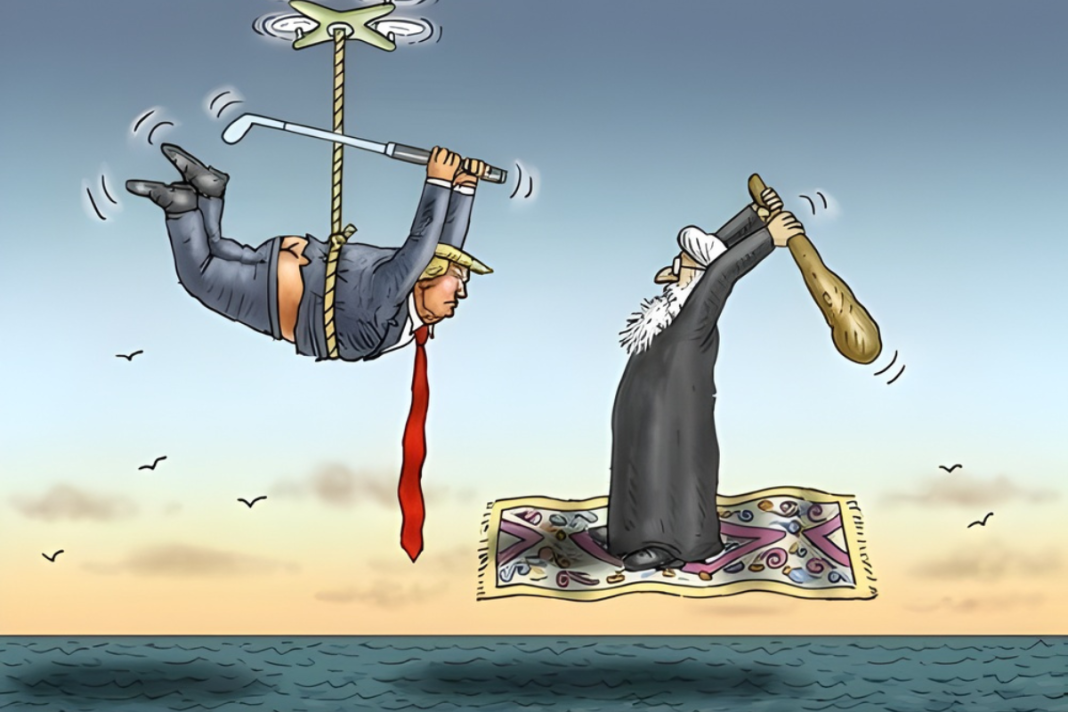
President Donald Trump has been briefed on possible military options against Iran. His message is not directed only at Tehran’s rulers, but at a global audience. He wants to project resolve. He wants to appear decisive. And he wants to distinguish himself from previous presidents who chose caution over confrontation.
Trump has declared that the United States is “locked and loaded.” He has warned that if Iran’s rulers continue killing protesters, America could step in. To many, this sounds like moral clarity. To others, it sounds like the opening chapter of another tragic intervention.
The hard truth is this: there is no military option that cleanly helps Iranian protesters without risking catastrophe.
History proves this again and again.
The Pattern of American Intervention
To understand the danger, one must first understand the pattern.
Since World War II, the United States has repeatedly used military force with the stated goal of protecting civilians or promoting democracy. Sometimes the intentions were genuine. Sometimes they were strategic. Almost always, the outcomes were far more complicated than promised.
- Iran, 1953: The CIA-backed overthrow of Prime Minister Mohammad Mossadegh restored the Shah, setting the stage for decades of repression and eventually the 1979 Islamic Revolution. Short-term stability created long-term disaster.
- Iraq, 2003: The removal of Saddam Hussein dismantled a brutal dictatorship—but also destroyed the state. What followed was civil war, sectarian violence, and the rise of ISIS. If Supreme Leader Falls: Iran’s Risky Path to a New Dawn
- Libya, 2011: NATO airstrikes helped topple Muammar Gaddafi. Democracy never arrived. Instead, Libya collapsed into militia rule, human trafficking, and permanent instability.
- Yemen: Foreign intervention worsened an already fragile state, creating one of the worst humanitarian crises of the modern era.
These are not abstract lessons. They are warnings written in blood.
Trump’s Three Military Options—and Why Each Fails
Trump’s advisers have outlined three broad paths. None lead where they claim.
Option One: Symbolic Strikes
This is the most limited option. A few airstrikes. A destroyed base. A show of force meant to send a message without triggering a war.
The problem is simple: symbolic strikes change nothing on the ground.
Iran’s security forces will not stop arresting women because a barracks was hit. Executions will not stop because a radar site was destroyed. Supreme Leader Ali Khamenei has survived sanctions, uprisings, assassinations, cyberattacks, and decades of isolation. A limited strike would not scare him—it would strengthen him.
Why BRICS Might Replace the U.S. Dollar
History shows that authoritarian regimes often benefit from foreign attacks. They use them to:
- Label protesters as foreign agents
- Unite wavering supporters
- Justify harsher repression
This happened in Iran during the Iran–Iraq War. It happened in Syria. It happened in Gaza. It happens almost every time.
Symbolic strikes make headlines. They do not make freedom.
Option Two: Decapitation—Removing the Leadership
The second option sounds dramatic: target Iran’s top leaders, eliminate them, and allow democracy to rise from the vacuum.
This idea has failed repeatedly. In Iraq, removing Saddam Hussein did not empower liberals or civil society. It empowered militias. In Libya, killing Gaddafi did not produce elections—it produced chaos.
Iran’s most powerful institution is not its presidency or parliament. It is the Islamic Revolutionary Guard Corps, a massive, well-armed organization with roughly 190,000 members and deep economic control.
If top leaders were killed:
- The Guard would not disappear
- It would consolidate power
- A military junta would likely emerge
This new regime would be more nationalist, more paranoid, and more violent—and far less vulnerable to public pressure.
Ironically, an intervention meant to help protesters could result in a government even worse than the one they oppose.
Option Three: Long-Term Air Campaign
The third option is the most dangerous.
This involves sustained airstrikes to degrade Iran’s security infrastructure over months or years. Command centers, weapons depots, communications—slowly dismantled.
On paper, it sounds controlled. No ground troops. Precision weapons. Limited casualties. In reality, this is how states collapse. When central authority breaks down:
- Borders dissolve
- Armed groups multiply
- Ethnic and regional divisions explode
This is what happened in Libya. This is what happened in Yemen. This is what nearly happened in Syria.
Iran is a country of more than 85 million people, with deep ethnic, religious, and regional complexity. A prolonged bombing campaign would not produce democracy—it would produce fragmentation.
And once chaos begins, no external power can control how it ends.
The Forgotten Reality: Iran’s Civil Society
One of the most uncomfortable truths is this: Iran’s civil society has been weakened by decades of repression.
Political parties are hollow. Labor unions are crushed. Independent institutions barely function. Courage exists—but organization does not.
This matters because revolutions do not succeed on courage alone. They require institutions ready to govern the next day.
Iranians know this. Many despise their rulers. But they have watched Iraq, Syria, and Libya. They know what happens when states collapse. They know chaos is not freedom.
Why Outside “Rescue” Rarely Works
Foreign military power cannot substitute for internal legitimacy.
Cruise missiles cannot build trust.
Airstrikes cannot create unity.
Bombs cannot write constitutions.
The idea that freedom can be delivered from the sky is one of the most persistent—and most dangerous—illusions in modern geopolitics.
Outside powers can help in limited ways:
- Diplomatic pressure
- Sanctions targeted at elites
- International investigations
- Refugee protection
- Information access
But they cannot fight a people’s struggle for them.
The Political Trap Trump Faces: When Strength Is Performed, Not Practiced
This does not mean Donald Trump will stand down. History strongly suggests the opposite.
Political pressure matters. Campaign slogans matter. Optics matter. And in modern politics, appearing strong often matters more than being right. Presidents do not always march toward war because they believe it is necessary—but because backing away feels humiliating.
History’s cruel joke is this: many wars begin not with confidence, but with insecurity dressed up as courage. Trump understands this instinctively. He knows that restraint is rarely rewarded in American politics. A missile launch looks decisive on television. Diplomacy looks like hesitation. Silence looks like weakness. And weakness, in the modern political imagination, is unforgivable.
This is the trap.
Trump has spent his political career selling the image of dominance—of the leader who never blinks, never retreats, never apologizes. In that narrative, choosing not to strike Iran is not prudence; it is surrender. And surrender is bad branding.
But history is full of leaders who confused performance with power.
In 1914, Europe did not march into World War I because its leaders were confident. They marched because they were afraid—afraid of looking weak, afraid of losing prestige, afraid of domestic backlash. Each escalation was justified as “defensive.” Each step made retreat harder. The result was catastrophe.
In 1964, Lyndon B. Johnson escalated in Vietnam not because he believed victory was easy, but because he feared being labeled soft on communism. The Gulf of Tonkin incident became a political shield, not a strategic necessity. What followed was a war nobody truly knew how to win.
Trump risks walking the same well-worn path, just with better television graphics. Campaign rhetoric has consequences. When you promise strength loudly enough, silence becomes impossible. Every protest crushed in Iran, every viral video, every headline becomes a test of masculinity rather than a question of policy.
And then there is the audience—voters, allies, rivals, cable news panels—watching closely, waiting to see if the man who talks toughest will act toughest. This is how leaders get boxed in by their own words.
History shows that leaders often escalate not because they have a clear endgame, but because they cannot find a graceful exit. The fear of retreat becomes greater than the fear of war. Pride replaces strategy. Momentum replaces planning.
Satirically speaking, the most dangerous phrase in global politics is not “we must act,” but “we cannot afford to look weak.”
Trump may genuinely believe that force will help Iranian protesters. Or he may simply believe that doing nothing looks worse than doing something—anything. Either way, the logic is the same: escalation becomes a political reflex.
The irony, of course, is that true strength is boring. It is slow. It does not trend. It does not chant slogans. It rarely satisfies crowds in the moment.
Wars, however, are excellent theater. And history reminds us—again and again—that when leaders confuse theater with strategy, the audience eventually pays the price.
The Final Reality
Strip away the slogans, and the truth remains:
- Symbolic strikes are meaningless
- Leadership assassinations risk military dictatorship
- Long-term bombing risks state collapse and regional war
There is no clean military solution.Iran’s future will be decided by Iranians—not by Washington, not by missiles, not by threats.Freedom, when it comes, will come slowly, painfully, and from within.
And history will judge harshly those who believed it could be delivered by force.