
The modern international system is built on the principle of sovereignty—the belief that every nation has the right to govern itself without external coercion. In theory, this principle remains central to international law and global diplomacy. In reality, however, recent events once again demonstrate how fragile sovereignty has become in a world dominated by American power.
Following public statements attributed to U.S. President Donald Trump, claiming that Venezuelan President Nicolás Maduro and his wife were detained during a U.S. operation, Russia formally urged the United States to “clarify the situation immediately.” Moscow warned that, if confirmed, such actions would represent a serious violation of Venezuelan sovereignty and a direct breach of international law.
Although Washington has not released a detailed official account, the implications of the claim itself have already sent shockwaves through diplomatic circles. The episode highlights a broader reality: in today’s geopolitical order, no country can consider itself fully independent when U.S. strategic interests are at stake.
- The Comparison Game: How Social Media Shapes Men’s Confidence, Desire, and Intimacy
- The Hidden Anxiety Behind Gen Z Men’s Dating Lives
- Why We Fall for Certain People: The Psychology of Attraction, Chemistry, and Romantic Compatibility
- The Infantino Effect: How One Man Turned FIFA Into a Global Punchline
- The Hormuz Deal is Almost Done — And Iran Might Be Holding All the Cards
Russia’s Response and the Sovereignty Question
Russia’s Foreign Ministry described the alleged operation as “deeply concerning,” emphasizing that the removal or detention of a sitting head of state would constitute an unacceptable assault on a sovereign nation. Moscow called on Washington to provide immediate clarification, stressing that international norms must be respected regardless of political disagreements.
Russia’s warning goes beyond the Venezuela case. It reflects long-standing frustration among many states that U.S. power frequently operates above or outside established legal frameworks. From Moscow’s perspective, sovereignty has become conditional—respected only when governments align with Washington’s geopolitical agenda.
Venezuela Under Prolonged U.S. Pressure
Venezuela has been subjected to sustained U.S. pressure for more than a decade. Economic sanctions, financial restrictions, diplomatic isolation, and the freezing of overseas assets have all been used to weaken the government in Caracas. Washington has justified these measures by citing democracy, human rights concerns, and corruption.
However, the humanitarian consequences have been severe. Sanctions have crippled Venezuela’s economy, limited access to food and medicine, and intensified social hardship. Critics argue that these policies punish ordinary citizens far more than political elites.
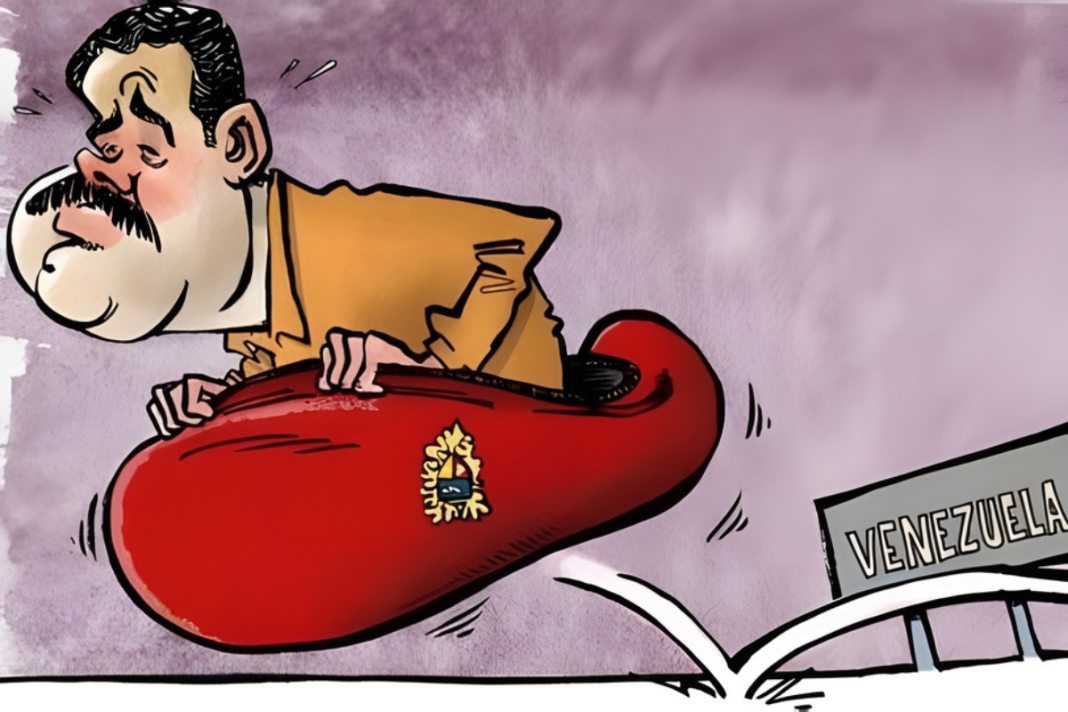
If the reported detention of Venezuela’s leadership is confirmed, it would mark a dramatic escalation—from economic coercion to direct intervention—reinforcing the perception that Venezuela’s political fate is shaped not in Caracas, but in Washington.
How American Aggression Operates
American aggression rarely takes a single, visible form. Instead, it functions as a multi-layered system of influence.
Military Dominance
The United States maintains hundreds of military installations worldwide and possesses unmatched force-projection capabilities. Even without deploying troops, this dominance shapes political calculations across the globe.
Economic Warfare
Through control of the global financial system and the dominance of the U.S. dollar, Washington can impose sanctions that effectively paralyze entire economies. Access to international banking, trade, and credit often depends on U.S. approval.
Diplomatic Pressure
Targeted states are frequently isolated through coordinated diplomatic campaigns, while allies are encouraged—or pressured—to follow Washington’s lead.
Narrative Control
Global media influence allows the U.S. to frame conflicts in moral absolutes, leaving little space for alternative interpretations or independent mediation.
Why True Independence Is Nearly Impossible
The Venezuelan situation underscores a wider truth: modern sovereignty is often symbolic rather than real.
- Conditional Independence: States remain “sovereign” only so long as their policies do not conflict with U.S. interests.
- Strategic Dependence: Even close allies face consequences if they diverge too sharply from Washington’s agenda.
- Fear of Retaliation: The risk of sanctions or isolation discourages many governments from exercising genuine autonomy.
- Weak International Enforcement: International law lacks effective mechanisms to restrain major powers.
Global Silence and Strategic Calculation
One of the most revealing aspects of U.S. aggression is the muted global response. Many governments express concern but avoid decisive action. This restraint is driven less by agreement than by calculation. Economic ties, security arrangements, and diplomatic dependencies make confrontation with Washington costly.
As a result, resistance is often rhetorical rather than practical.
Democracy as a Strategic Instrument
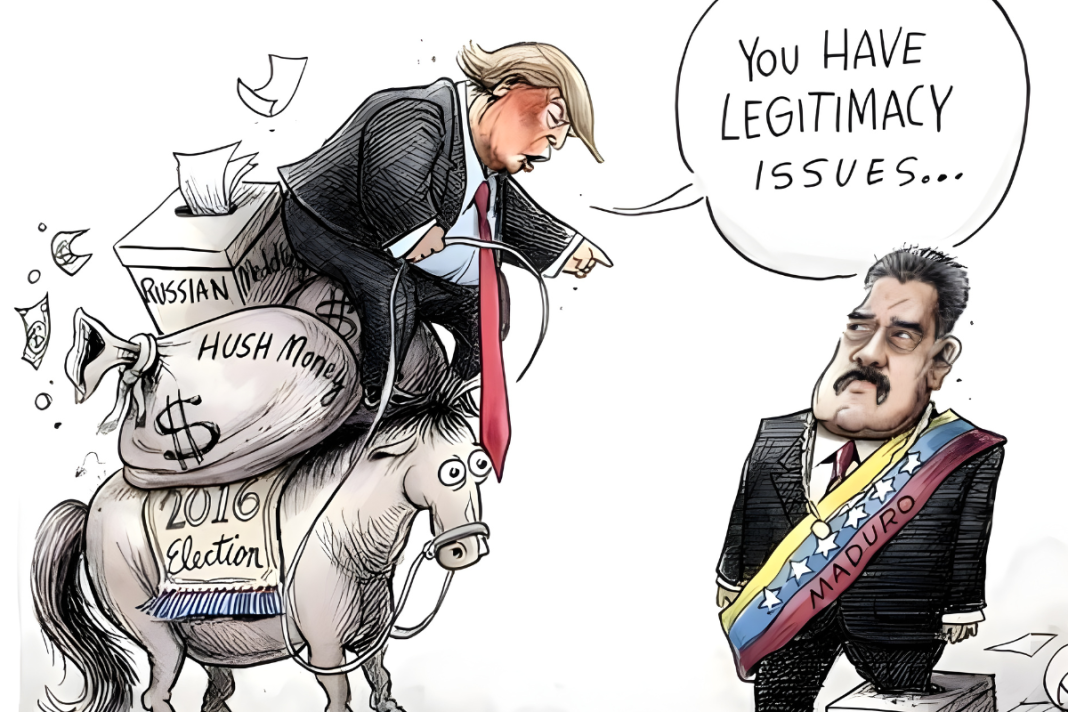
While the United States presents its actions as efforts to defend democracy, critics argue that democratic principles are applied selectively. Elections and institutions are accepted when outcomes favor U.S. interests and questioned when they do not.
In Venezuela, political legitimacy has been contested without broad international consensus, reinforcing the belief that “democracy promotion” often serves strategic goals rather than universal values.
The Decline of International Law
When powerful states can intervene, sanction, or detain leaders without accountability, international law risks becoming a symbolic framework rather than a binding system. Russia’s warning reflects a growing concern that global rules apply unevenly—strictly enforced for weaker states and loosely interpreted for stronger ones.
Managed Sovereignty in a Unipolar World
The modern world is not divided simply into free and unfree nations. Instead, it consists of varying degrees of managed sovereignty. States operate within invisible boundaries shaped by economic dependency, military alliances, and geopolitical pressure.
True independence—where a nation can pursue its own path without fear of external punishment—is increasingly rare.
Conclusion: Venezuela as a Warning
The developments surrounding Venezuela, Russia’s demand for clarification, and the broader pattern of U.S. behavior highlight a fundamental contradiction in the global order. Sovereignty is celebrated rhetorically, yet routinely compromised in practice.
American aggression does not always appear as open warfare. More often, it manifests through sanctions, pressure, covert operations, and narrative dominance—leaving lasting consequences without formal declarations.
Until international law applies equally to all states, and until power is balanced by accountability, national independence will remain more aspiration than reality.
Venezuela is not an exception. It is a warning.