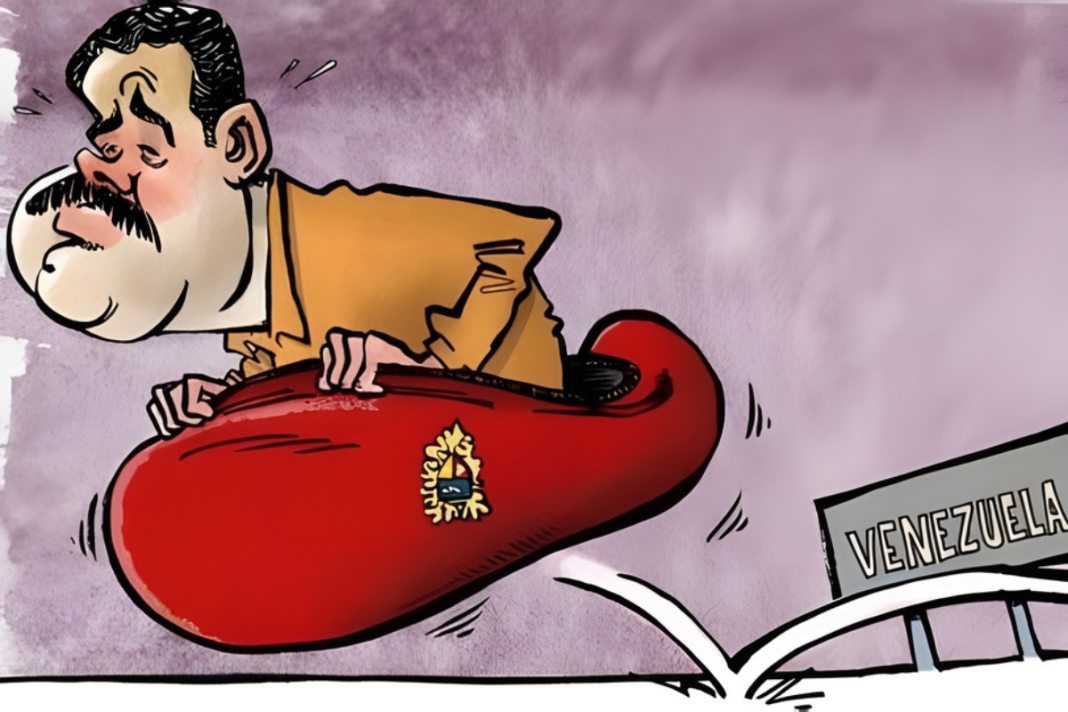

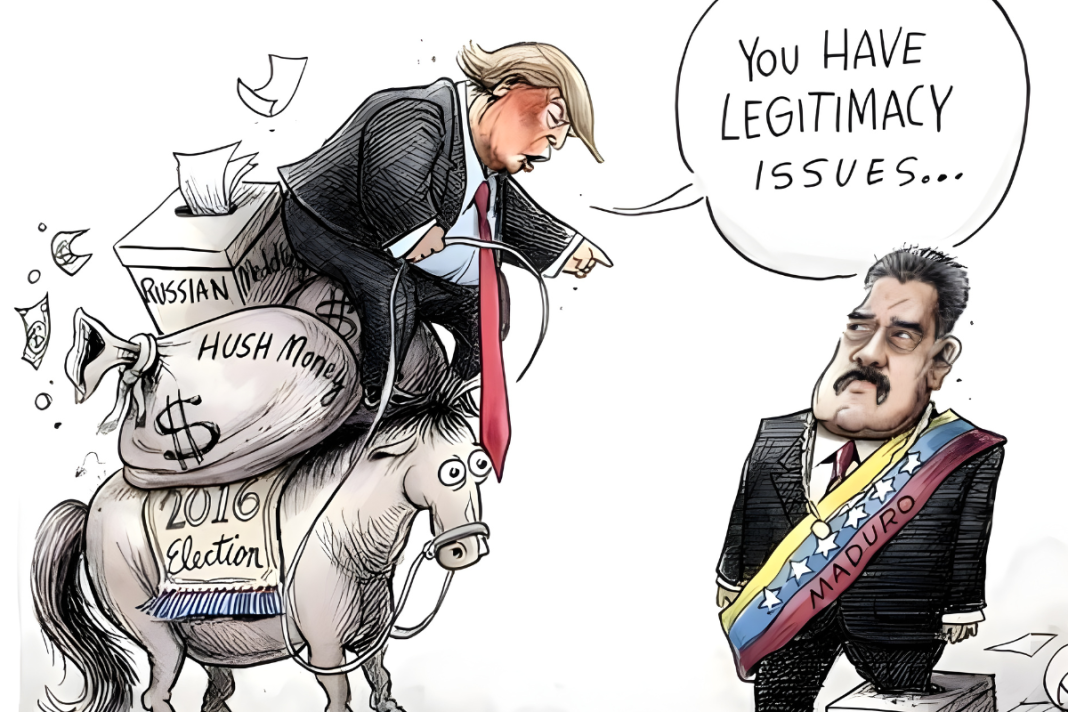
Recent statements and reported actions by the administration of President Donald Trump regarding Venezuela have reignited a familiar argument in Washington: that decisive military intervention can swiftly remove an illegitimate leader and set a country on a new political path. Supporters of this view frequently point to the 1989 U.S. invasion of Panama—known as Operation Just Cause—as proof that such operations can succeed.
However, historical evidence, geopolitical realities, and institutional differences suggest that comparisons between Panama and Venezuela are deeply misleading. While both cases involve authoritarian leaders accused of criminal activity, the similarities largely end there. Treating Venezuela as a repeatable version of Panama risks overlooking the very factors that determine whether foreign intervention stabilizes a country or pushes it into prolonged disorder.
The Enduring Myth of the “Clean Intervention”
Operation Just Cause remains a powerful reference point in U.S. foreign policy debates. In December 1989, American forces entered Panama, arrested Manuel Noriega, dismantled the Panamanian Defense Forces, and facilitated the installation of Guillermo Endara as president. Noriega was later tried and convicted in U.S. courts on drug trafficking charges.
From a narrow operational standpoint, the mission achieved its immediate objectives quickly. This efficiency has allowed it to be remembered in Washington as a “model intervention,” often stripped of broader context or long-term consequences.
That memory is now shaping discourse around Venezuela and President Nicolás Maduro. The narrative follows a familiar pattern: a corrupt, illegitimate ruler; a suffering population; and a decisive use of U.S. military power to restore order and democracy. Yet history demonstrates that such narratives often oversimplify complex political environments.
Geography and Military Reality
One of the most decisive differences between Panama in 1989 and Venezuela today lies in geography and military posture.
When President George H. W. Bush authorized the invasion of Panama, the United States already had a massive military footprint inside the country. More than 10,000 U.S. troops were stationed there, and the headquarters of U.S. Southern Command operated from Panamanian soil. This meant that logistical lines, intelligence networks, and command structures were already established.
Venezuela presents no such conditions. While the United States possesses overwhelming naval and air power in the region—including aircraft carriers such as the USS Gerald R. Ford—these forces operate offshore. Naval power can project force, conduct strikes, and support limited operations, but it cannot substitute for sustained on-the-ground presence required to control territory, secure institutions, or manage civil order in a nation of nearly 28 million people.
History consistently shows that the absence of a stable ground presence following regime change increases the likelihood of power vacuums rather than political transitions.
The Problem of Political Succession
Perhaps the most critical question in any intervention is not how a leader is removed, but what follows that removal.
Panama in 1989 was a relatively small state whose political institutions had long existed under strong U.S. influence. Its economic system, security apparatus, and governing elite were already closely linked to Washington. The installation of a new government, while controversial, occurred within a framework that the United States largely understood and controlled.
Venezuela’s political system is fundamentally different. It is deeply polarized, ideologically entrenched, and shaped by decades of internal struggle. Removing Maduro does not automatically produce a unified opposition capable of governing.
This reality was clearly demonstrated in 2019, when the United States and several allies recognized Juan Guaidó as Venezuela’s interim president. The expectation was that international pressure would fracture the ruling coalition and prompt a rapid transition. That outcome did not materialize. The opposition remained divided, and the state apparatus—particularly the military—remained loyal to Maduro.
The failure of that effort offers a critical lesson: legitimacy conferred from abroad does not necessarily translate into authority on the ground.
The Structure of the Venezuelan Military
A central reason for the durability of the Maduro government lies in the structure of the Bolivarian Armed Forces (FANB).
Unlike the Panamanian Defense Forces of 1989, the FANB has been deliberately redesigned over decades to resist internal fragmentation and external pressure. Under Hugo Chávez and later Maduro, the military underwent extensive restructuring. Command chains were divided, overlapping authorities were created, and internal competition was encouraged along lines of political loyalty rather than professional hierarchy.
At the same time, senior officers were integrated into the economic system through access to state resources and informal markets. This alignment of political survival with personal economic benefit significantly reduced incentives for defection.
Historical parallels support the importance of this factor. In Iraq after 2003, the dissolution of the military created a massive security vacuum that fueled insurgency and instability. In Venezuela, by contrast, the military has remained intact and politically invested in regime survival. A short-term military operation does little to alter that calculus.
Natural Resources and Perception
Another major distinction between Panama and Venezuela lies in natural resources.
Panama’s strategic value centered on the canal, an asset already governed by international treaties and long-standing agreements. Venezuela, however, possesses the world’s largest proven oil reserves. This fact shapes both domestic politics and international perceptions.
Across Latin America, U.S. involvement in resource-rich states has historically been viewed with suspicion. From Guatemala in 1954 to Chile in 1973, interventions—whether overt or covert—have often been associated with economic interests. As a result, claims that Washington seeks control over Venezuelan oil resonate strongly, regardless of their factual accuracy.
Such perceptions matter. They influence public opinion, regional diplomacy, and the legitimacy of any post-intervention government. Even well-intended actions can be undermined if they are widely viewed as resource-driven rather than humanitarian or democratic.
Legitimacy Versus Stability
There is little dispute among international observers that Maduro’s government lacks democratic legitimacy and has overseen severe human rights violations. Reports from independent monitors indicate that the July 2024 election did not meet basic standards of fairness.
However, history makes clear that illegitimacy alone does not determine outcomes. The removal of an authoritarian leader does not guarantee stability, prosperity, or democratic renewal. In many cases, it produces the opposite.
The U.S. interventions in Iraq and Libya provide sobering examples. In both cases, authoritarian rulers were removed relatively quickly. In both cases, the absence of robust post-conflict planning led to prolonged instability, institutional collapse, and humanitarian crises.
These precedents underscore a central lesson: regime change is an event, not a solution.
What Historical Evidence Suggests
Comparative history suggests several conditions are necessary for a successful intervention:
- Institutional continuity, particularly within security forces
- Broad domestic political consensus
- Regional and international legitimacy
- Long-term economic and administrative support
Panama met many of these conditions in 1989. Venezuela currently meets few of them.
Absent these foundations, military action risks creating a power vacuum rather than a transition. This pattern has repeated itself across regions and decades, from Afghanistan to Libya.
Conclusion: History Is Not Repeating—It Is Warning
The analogy between Panama and Venezuela may be politically attractive, but it is historically unsound. Panama was a small, heavily U.S.-influenced state with limited institutional resistance. Venezuela is a large, complex society with entrenched political, military, and economic structures.
History does not suggest that Venezuela can be “fixed” through a rapid military operation, however precise or well-executed. Instead, historical evidence warns that without a credible political transition, inclusive governance, and sustained international engagement, such actions are more likely to deepen instability than resolve it.
The true measure of success is not the removal of a leader, but the conditions that follow. On that metric, history urges caution—not confidence.