


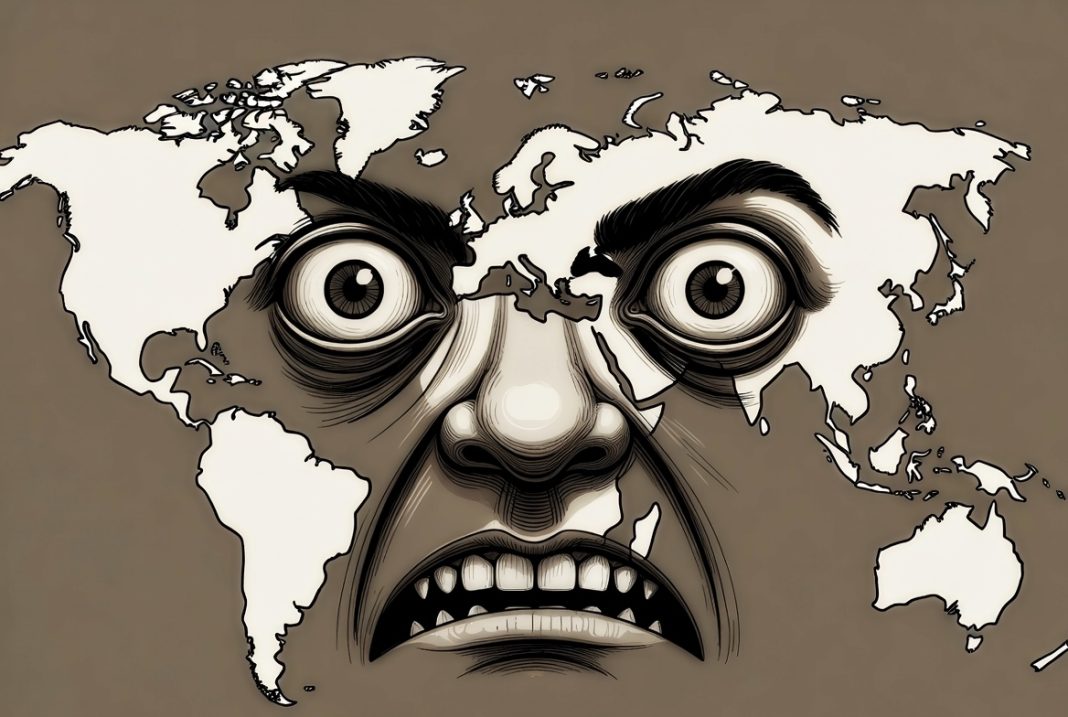
Small countries are no longer sidelines in world politics. Today they often sit at the center of big power competition. The United States, China, Russia, and others look for influence, bases, markets, and allies. This makes small nations a new kind of battleground. The fighting is not always with tanks and planes. Much of it is political, economic, cyber, and indirect. But the stakes are high for the people who live in those small countries. This essay explains why this is happening, using history and clear examples. It also shows what the future might bring and what small nations can do to protect themselves.
The old pattern: great powers and small states have always mixed
History shows great powers have long fought through smaller states. Big rivals use small places to gain advantage without fighting each other directly. In the 20th century, the United States and the Soviet Union often backed local forces in faraway wars instead of fighting each other directly. They supported armies, political parties, and rebel groups in places like Korea, Vietnam, Angola, and many others. These fights are called “proxy wars” because the superpowers fought through local actors instead of fighting face to face. The pattern is simple: small states become arenas where big powers test ideas, tools, and influence. Encyclopedia Britannica+1
Why the modern era looks different — but still familiar
Today’s competition looks like the old one in some ways. Big powers still seek influence and strategic advantage. But the tools have changed and multiplied. Besides military aid and covert help, superpowers now use money, trade deals, infrastructure projects, technology controls, cyberattacks, soft power, legal pressure, and even cultural campaigns. The result: influence can be gained cheaply and quietly, and it can spread quickly. Small countries feel pressure from many directions at once.
Why small nations matter more now
There are five big reasons small nations matter more today.
-
Geography and strategic position.
A small island or coastal country can control sea lanes, air routes, or access to larger regions. Think of shipping chokepoints, nearby military bases, or places where a base can be built quickly. Controlling or influencing these small places helps big powers project force and show presence. -
Resources and minerals.
Many small countries hold big resources. Rare earth elements, minerals for batteries, oil, gas, or fisheries can be vital for global industry. When a small country has what a big power needs, that country becomes important and contested. -
Economic and technological links.
Small nations can host factories, data centers, submarine cables, or semiconductor plants. Their policies about trade, investment, and technology can affect global supply chains. -
Political legitimacy and votes.
In global institutions, each country has a voice. Small states’ support can matter in bodies like the United Nations, and their public stance matters in global opinion. -
Buffer states and forward positions.
Small neighbors can act as buffers or launch points in a regional contest. They can be allies, neutral zones, or battlefields in a crisis.
These reasons turn many small states into prize pieces in a larger strategic chess game.
History shows the pain of being a battleground
Examples from the past are painful and clear.
-
Korea (1950–1953). The Korean War started as a local civil conflict but became a hot war between global powers. North Korea had support from China and the Soviet Union. South Korea was backed by the United States and other Western states. The war cost millions of lives and left the peninsula split. Small Korea became the main arena of a major rivalry.
-
Vietnam (1950s–1975). Vietnam showed how a small country could become the central struggle of a superpower contest. The U.S. poured resources and troops into Vietnam to block the spread of communism. The Soviet Union and China also supported communist forces. The conflict lasted decades and caused huge destruction.
-
Angola, Afghanistan, and many African and Latin American conflicts. During the Cold War, the U.S. and the Soviet bloc backed opposing sides across the world. That support often prolonged conflicts and raised human cost. Proxy wars were cheaper and less risky for the superpowers, but they were devastating for the small countries themselves. Wikipedia+1
Those cases show two things. First, big power rivalry often finds a root in a small place. Second, small countries and ordinary people pay the highest price.
New patterns after the Cold War
After the Cold War ended, many hoped great-power rivalry would fade. For a while, the world seemed less divided. But competition returned, in new forms. Russia gained a new assertiveness under Putin. China rose fast, gaining economic and military power. The United States adjusted its policies in response. Smaller powers found new ways to work with these big actors. So the battleground shifted, and in some ways, it spread.
The rise of non-military tools: money, debt, and infrastructure
One striking change is how money and investment now shape influence.
China’s Belt and Road Initiative (BRI) is a major example. China has invested in ports, roads, railways, and power plants in dozens of countries. These projects bring money and jobs. But they can also create dependence. When a country owes large loans and cannot pay, it may give China long-term control over strategic assets. Critics call this “debt-trap diplomacy.” Supporters say loans help poor countries build needed infrastructure. Either way, economic influence can be powerful and long-lasting. The same idea appears in other places: states use trade, investment, and loans to gain leverage. AP News
Russia’s playbook: military ties, private armies, and energy leverage
Russia often pursues influence by offering military support, selling weapons, and using energy supplies as pressure. In recent years, private military companies like the Wagner Group have worked in small countries across Africa and the Middle East. They offer security and muscle, sometimes in exchange for mining rights or political backing. Russia also uses natural gas and oil to gain influence in Europe and elsewhere. These tactics show how a big power can use direct force, mercenaries, and economic tools to shape outcomes in smaller states.
The cyber and information front
Modern competition also happens in cyberspace and media. States deploy hackers to steal data, disrupt institutions, or target infrastructure. They run disinformation campaigns to shape public opinion or election results. These actions are less visible than tanks, but they can be very effective. Small countries often have weak cyber defenses or less media literacy, making them vulnerable to outside influence. A campaign to sway an election or discredit a leader can change a small state’s alignment without a single shot fired.
Technology is its own battleground
Control of advanced technology—like semiconductors, satellites, and artificial intelligence—has become a central strategic objective. Small countries can host key factories, data centers, or rare material extraction sites. Big powers contest these locations because controlling technology means controlling economic and military advantages. Export controls, sanctions, and “friend-shoring” (moving supply chains to friendly countries) are modern tools to keep technology out of rivals’ hands. These policies pressure small countries to choose sides or risk losing trade and investment.
The role of international institutions and law
Small countries use international law and institutions to gain protection. They appeal to the United Nations, the International Court of Justice, and regional bodies. These venues give small states a voice and sometimes practical support. But big powers can block or ignore international rulings. The institutions help, but they cannot always stop pressure or coercion on the ground.
Recent examples where small states mattered
Several recent episodes show how small states are crucial in modern power politics.
-
Ukraine (2022 onward). Ukraine is not a big power, but the war there drew in deep responses from NATO, the EU, the United States, and Russia. Sanctions, weapons, and diplomacy flowed to and through this smaller nation. The conflict reshaped European security and showed how a local war can have global effects.
-
The Pacific islands and Taiwan. Small island nations in the Pacific have strategic value. China and the U.S., along with their partners, have increased diplomatic activity, aid, and military attention in this region. Taiwan’s diplomatic ties with small countries in Latin America and the Pacific are a constant source of pressure and bargaining.
-
Africa’s shifting partnerships. Many African states now accept investment and security ties from China, Russia, the U.S., and Turkey. These relationships often come with political strings or new security dynamics. Africa became a competitive space where small countries decide whom to trust.
-
Latin America and the Caribbean. China’s economic footprint in the region grew, and small states have switched diplomatic recognition from Taiwan to Beijing in recent years. These shifts show how economic incentives and geopolitics interact. Atlantic Council+1
The human cost in small battlegrounds
When small states are battlegrounds, people pay the price. Civil conflict, displacement, economic shocks, and political instability often follow. Health, education, and infrastructure suffer. The example of Cold War proxy wars is stark: local populations endured massive loss of life, fractured societies, and long-term trauma. Today’s competition may be less openly violent in some cases, but it still risks violence and serious hardship. The danger is that outside powers, by pushing their interests, can make local problems worse.
Small states are not helpless — they have agency
It is easy to think small countries are only victims. That is not true. Small states can use smart policies to protect their interests.
-
Balancing: Some small countries avoid close alignment with any one big power. They take deals from many sides and keep their options open.
-
Bandwagoning: Others choose a powerful ally for security or economic reasons.
-
Issue-focused alliances: Small states sometimes lead on specific global issues (like climate change) to gain influence and forge networks that protect their interests.
-
Legal and diplomatic tools: Small countries use international law, island coalitions, and regional organizations to build power beyond their size.
-
Economic diversification: By diversifying partners and exports, small states reduce risk from reliance on a single big partner.
Good diplomacy, clear rules, and domestic resilience can give small countries real leverage.
What big powers should learn from history
History teaches that using small states as battlegrounds can backfire. Proxy wars can entangle great powers in long, costly conflicts. Economic coercion can breed resentment and instability. When big powers respect small states’ sovereignty and support their development, they get more stable relationships. The lesson is simple but often ignored: cooperation and respect usually give more lasting gain than pressure and coercion.
Red lines and risks today
Yet the risks are real. Several “red lines” exist where miscalculation could spark crisis:
-
Territorial disputes in seas and islands can cause naval clashes.
-
Election interference can topple governments and provoke strong domestic backlashes.
-
Debt traps where a state loses control of key assets can create long conflicts over sovereignty.
-
Private military actors and proxy fighters can drag a state into wider conflicts.
These flashpoints show why small-state battlegrounds can become dangerous fast.
What the international community can do
There are practical steps the global community can take to reduce the danger.
-
Strengthen international law and enforcement. Make legal rules clearer and penalties for violating sovereignty firmer.
-
Improve transparency of loans and deals. Public rules on contracts reduce corruption and hidden dependence.
-
Support small states’ resilience. Aid programs that focus on public health, education, infrastructure planning, and debt management help small states resist coercion.
-
Build regional security dialogues. Local and regional talks lower the chance of misunderstandings turning violent.
-
Regulate private military actors and mercenaries. International rules could limit outside military forces acting in small states.
-
Invest in cyber and media resilience. Help states defend elections and public information spaces.
Collective steps like these make small states less easy to coerce and the world more stable.
The likely future: increased competition, but also new tools for protection
The trend of small states as battlegrounds will likely continue. But the shape of competition may change. Some areas will see more economic influence, others more cyber contests, and some more covert operations. At the same time, small states will get better at defending themselves — with help from alliances, international law, and new diplomatic strategies.
Final thought: dignity and survival for small nations
Small states should not be treated as pawns. They deserve dignity and space to choose their future. The world is safer when small countries can make their own decisions without coercion. Big powers should remember that lasting partnerships are built on mutual benefit, not pressure. If the major powers learn that lesson — and if the international community backs small states with practical tools — then future competition can be managed without making small nations suffer.


