
An Analysis of US-Iran Relations, Past Interventions, and Future Threats
The Latest Crisis
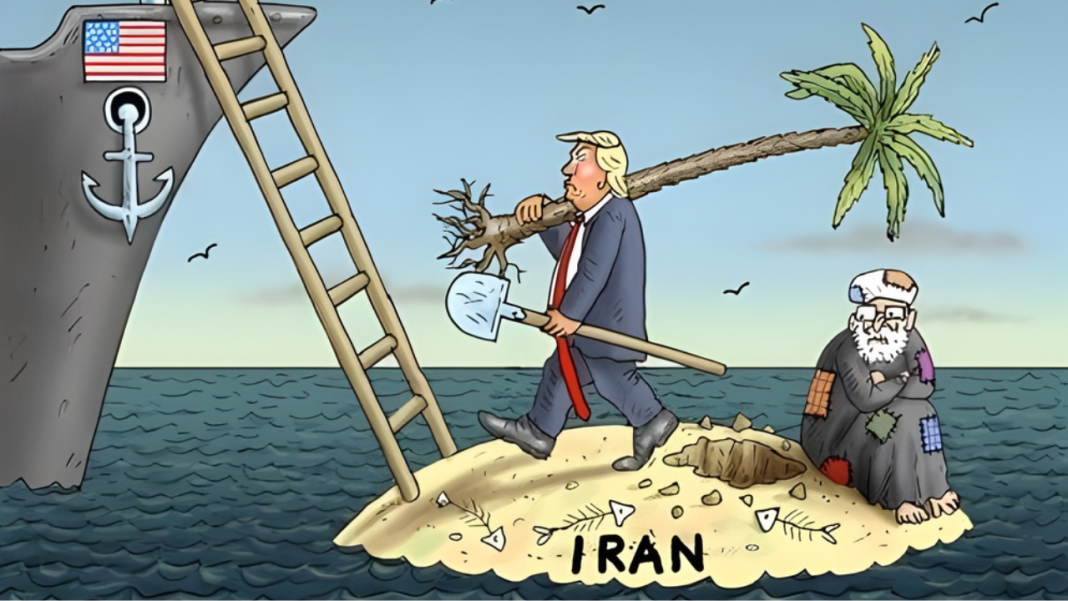
President Donald Trump has dramatically increased America’s military presence in the Persian Gulf and issued a stark warning to Iran. Trump wrote on social media that a “massive Armada” was heading toward Iran, moving quickly with “great power, enthusiasm, and purpose,” led by the aircraft carrier USS Abraham Lincoln. His message was clear and ominous: “Time is running out” for Tehran to negotiate a nuclear deal, warning that the next attack will be “far worse” than previous strikes.
This is not just another episode of diplomatic posturing. It represents a potentially dangerous escalation in a conflict that has roots stretching back more than seventy years. To understand where we are today and where we might be heading, we must look at the history of US-Iran relations, the pattern of American intervention in the Middle East, and the devastating consequences that past wars have brought to the region.
The Immediate Trigger: Nuclear Tensions and Trade Wars
The Current Crisis
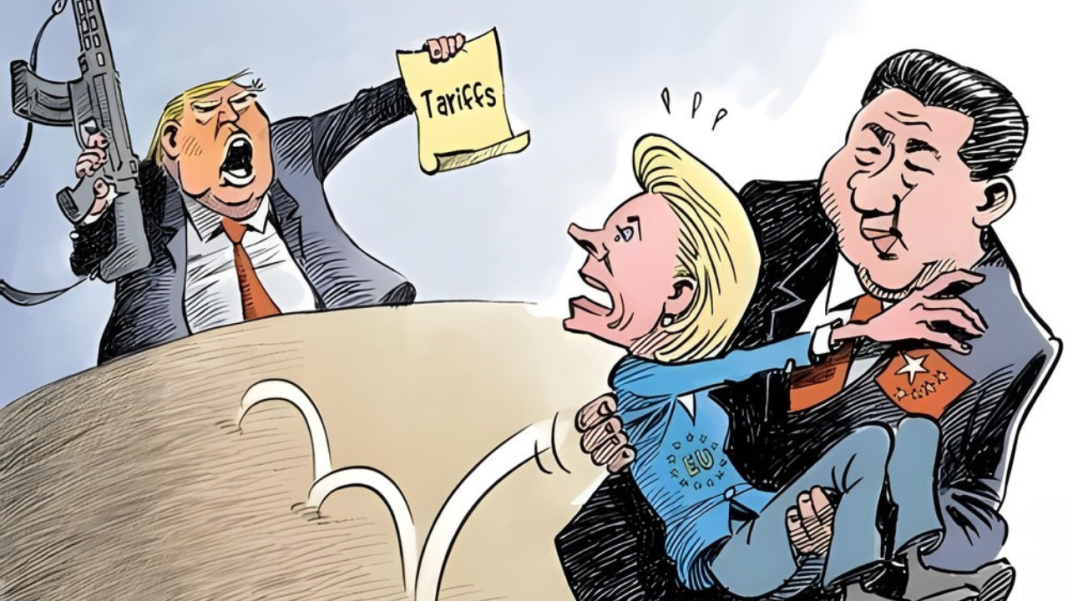
In April 2025, the United States imposed very high tariffs on Chinese goods as part of an ongoing trade dispute, and China responded by announcing restrictions on the export of certain rare earth elements and special magnets to the United States. While this may seem unrelated to Iran, it demonstrates how economic and military pressures are intertwined in modern geopolitics.
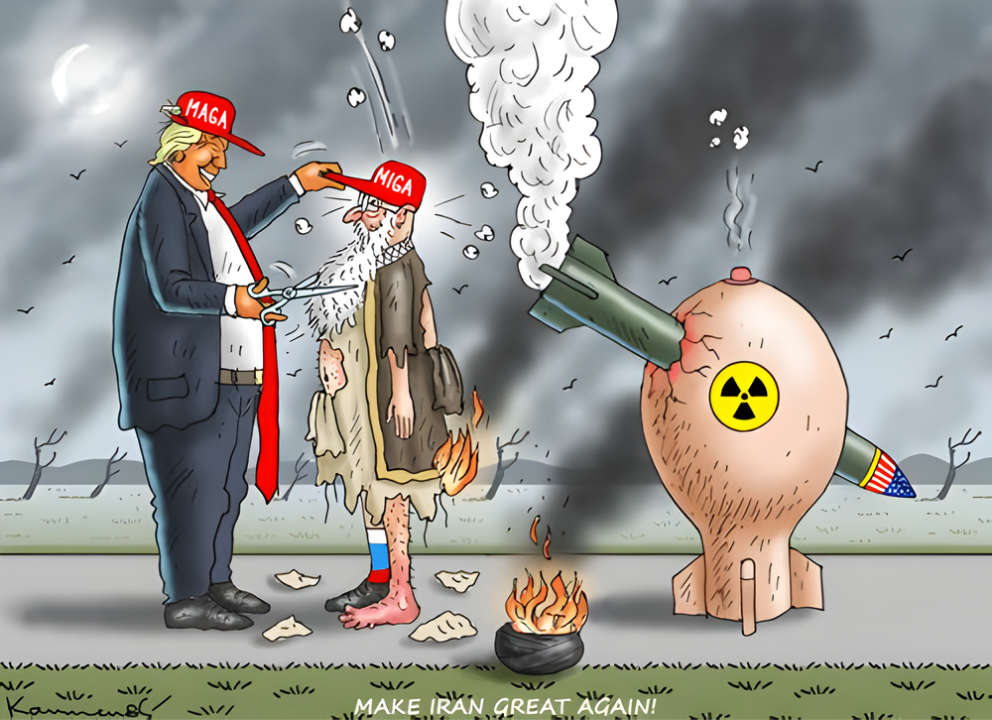
The immediate trigger for the current Iran crisis, however, centers on the nuclear program. In June 2025, the United States struck three Iranian nuclear sites in what was called ‘Operation Midnight Hammer,’ which Trump claimed destroyed Iran’s nuclear weapons development programs.
Trump has repeatedly indicated that he is considering ordering military action in response to Tehran’s crackdown on antigovernment protests this month. According to reports, at least 6,126 people, including 5,777 protesters, have died in Iran’s crackdown on nationwide protests.
Iran’s Response
Iran has not remained silent. Iranian Foreign Minister Seyed Abbas Araghchi warned that the nation’s military is ready to “immediately and powerfully respond to ANY aggression against our beloved land, air, and sea,” adding that Iran’s armed forces have “their fingers on the trigger”.
A senior adviser to Iran’s supreme leader warned that “a limited strike is an illusion,” stating that “any military action by the United States, from any location and at any level, will be considered the start of a war,” with responses targeting “the aggressor, the heart of Tel Aviv and all those who support the aggressor”.
Iran’s permanent mission to the United Nations responded by pointing to past American failures: “Last time the U.S. blundered into wars in Afghanistan and Iraq, it squandered over $7 trillion and lost more than 7,000 American lives”.
The Deep Historical Roots: The 1953 Coup That Changed Everything
To truly understand the current crisis, we must go back to August 19, 1953 – a date that remains burned into Iranian collective memory.
The Overthrow of Democracy
In August 1953, a coup d’état occurred in Iran that resulted in the deaths of some 300 people during fighting in Tehran and removed Mohammad Mosaddegh from power while restoring Mohammad Reza Shah Pahlavi as Iran’s leader. This was not a spontaneous uprising or internal power struggle. The coup was instigated by the United States (CIA), under the name TP-AJAX Project or Operation Ajax, and the United Kingdom (MI6), under the name Operation Boot.
What led to this dramatic intervention? The answer lies in oil and Cold War politics.
The Oil Nationalization That Sparked a Coup
A key motive was to protect British oil interests in Iran after Mosaddegh nationalized the country’s oil industry. Mosaddegh had sought to audit the documents of the Anglo-Iranian Oil Company (AIOC), a British corporation (now part of BP), to verify that AIOC was paying the contracted royalties to Iran, and to limit the company’s control over Iranian oil reserves.
When the oil company refused to cooperate, the parliament (Majlis) voted to nationalize Iran’s oil industry and to expel foreign corporate representatives from the country.
This was unacceptable to Western powers. Britain, reluctant to shoulder the responsibility alone, persuaded the U.S. to join forces by playing on Cold War fears that Mosaddegh, an avowed anticommunist, was aligning himself with Tudeh, the Iranian Communist Party.
How the Coup Was Executed
The operation was sophisticated and cynical. The United States took the leading role in a covert operation whereby CIA-funded agents were used to foment unrest inside Iran by way of the harassment of religious and political leaders and a media disinformation campaign.
The CIA operation involved Kermit Roosevelt, CIA agent and grandson of Theodore Roosevelt, arriving in Tehran with suitcases full of cash to manufacture an opposition movement by hiring people to protest, bribing newspaper editors to print misinformation, and creating a sham communist party to act as a straw man.
When the coup succeeded, the Shah quickly returned to take power and signed over forty percent of Iran’s oil fields to U.S. companies.
The Unintended Consequences
At the time, the coup seemed like a success for Western interests. It marked the first peacetime use of covert action by the United States to overthrow a foreign government and became an important precedent for events like the 1954 coup in Guatemala and the 1973 overthrow of Salvador Allende in Chile.
But the long-term consequences were disastrous. The government of Prime Minister Mohammad Mosaddegh which was ousted in the coup was the last popular, democratically oriented government to hold office in Iran. The regime replacing it was a dictatorship that suppressed all forms of popular political activity, producing tensions that contributed greatly to the 1978–1979 Iranian revolution.
As one historian put it: “From the perspective of history, the coup was not successful for the United States. The 1979 revolution was a long-term effect of the increasing repression from the shah, who came to power as a result of the coup”.
A CIA staff historian stated: “The CIA carried out a successful regime change operation. It also transformed a turbulent constitutional monarchy into an absolutist kingship and induced a succession of unintended consequences. The 1979 Iranian Revolution was a most impactful unintended consequence”.
The Legacy of Betrayal
The CIA now officially describes the 1953 coup it backed in Iran that overthrew its prime minister and cemented the rule of Shah Mohammad Reza Pahlavi as undemocratic. President Barack Obama acknowledged this history in 2009, stating: “In the middle of the Cold War, the United States played a role in the overthrow of a democratically elected Iranian government”.
But for Iranians, particularly in the Islamic Republic, the coup is more than historical fact – it is a wound that never healed. Iran’s hard-line state television spent hours discussing the coup on its anniversary, and in their telling, a straight line leads from the coup to the 1979 Islamic Revolution. It still fuels the anti-Americanism that colors decisions made by the theocracy.
When Iran’s mission to the United Nations described the 1953 coup as marking “the inception of relentless American meddling in Iran’s internal affairs,” they dismissed U.S. acknowledgments, stating: “The U.S. admission never translated into compensatory action or a genuine commitment to refrain from future interference”.
The Iran-Iraq War: A Devastating Precedent
Another critical chapter in understanding the potential consequences of war with Iran is the Iran-Iraq War of 1980-1988 – one of the longest and bloodiest conventional wars of the 20th century.
The Outbreak and Duration
Open warfare began on September 22, 1980, when Iraqi armed forces invaded western Iran along the countries’ joint border, though Iraq claimed that the war had begun earlier that month, on September 4, when Iran shelled a number of border posts.
Iraq’s primary rationale for the attack against Iran cited the need to prevent Ruhollah Khomeini, who had spearheaded the Iranian revolution in 1979, from exporting the new Iranian ideology to Iraq. There were also fears among the Iraqi leadership of Saddam Hussein that Iran, a theocratic state with a population predominantly composed of Shia Muslims, would exploit sectarian tensions in Iraq.
The war lasted eight brutal years, with fighting ended by a 1988 ceasefire, though the resumption of normal diplomatic relations and the withdrawal of troops did not take place until 1990.
The Horrific Human Cost
The casualty figures are staggering and remain disputed. Estimates of total casualties range from 1,000,000 to twice that number. The number killed on both sides was perhaps 500,000, with Iran suffering the greatest losses.
Iran acknowledged that nearly 300,000 people died in the war; estimates of the Iraqi dead range from 160,000 to 240,000. Iraq suffered an estimated 375,000 casualties, the equivalent of 5.6 million for a population the size of the United States.
But these numbers only tell part of the story. Human-wave attacks, missile attacks, and chemical weapons including lethal nerve gas, blister-agent mustard gas, and chemical fires killed one million soldiers on the battlefields and wounded many thousands of others. Hundreds of thousands of civilians suffered casualties, and millions became refugees.
The War’s Brutal Tactics
The Iran-Iraq War saw some of the most horrific warfare tactics of the modern era.
Iraq began using chemical weapons in 1984, and extensive evidence compelled the United Nations in March, 1986, to condemn Iraq formally for this practice. By early 1987, Iraq was using chemical agents as offensive rather than defensive weapons, and in March, 1988, Iraq launched at least thirty-nine chemical attacks against civilians.
It is estimated that between 50,000 and 100,000 Kurds were killed by Iraqi forces during the series of campaigns code-named Anfāl that took place in 1988.
The war also featured the “Tanker War” and the “War of the Cities.” By 1988, ships from eighteen national navies were patrolling the Persian Gulf, more than four hundred sailors had died, hundreds of ships had been attacked, more than eighty of which suffered serious damage.
The spring of 1988 saw Iraqi SCUD missiles modified to reach Tehran being used against Iranian cities. Many fled the city and some put the number of refugees at 4 million, half the city’s population. Iran retaliated by using missiles against Baghdad.
The Pointless Outcome
After eight years of unimaginable suffering, what was achieved? The war brought neither reparations nor changes in borders. About half a million Iraqi and Iranian soldiers and an equivalent number of civilians died, with many more injured.
At the end, virtually none of the issues which are usually blamed for the war had been resolved. When it was over, the conditions which existed at the beginning of the war remained virtually unchanged.
Long-Term Consequences
The war’s impact extended far beyond the immediate battlefield. Iran and Iraq accumulated significant foreign debt to finance the war effort, burdening their economies for years to come. Millions of people were displaced by the fighting, creating refugee crises and straining resources in both countries. Long-term health effects due to the use of chemical weapons continue to affect veterans and civilians exposed to these agents.
The war exacerbated sectarian tensions between Sunni and Shia Muslims, as Iraq (Sunni-led) and Iran (Shia-led) became proxies for the broader religious divide. The war altered the balance of power in the Middle East, weakening both Iran and Iraq while allowing other states to assert their influence.
Perhaps most ominously, Iraq had built up $80 billion of foreign debt which the Arab states such as Kuwait refused to write off. The invasion of Kuwait, leading to the Gulf War, was seen by the Iraqis as the only way to cancel this debt with long-term and bloody consequences for the Iraqi people.
Forty years later, the legacy of the Iran-Iraq War still reverberates. Neither nation declared victory, and both armies ended in the same positions where they started.
Probable Causes for a Potential US Attack on Iran
Based on historical patterns and current rhetoric, we can identify several probable causes that might lead to American military action against Iran:
1. The Nuclear Program
This is the most explicitly stated cause. Trump and his administration have made it clear that preventing Iran from obtaining nuclear weapons is their top priority. The previous strikes on Iranian nuclear facilities in June 2025 demonstrate that this is not merely rhetorical – the United States has already acted on this concern.
The logic is straightforward: a nuclear-armed Iran would fundamentally alter the balance of power in the Middle East, threaten Israel (a key American ally), and potentially trigger a nuclear arms race in the region as Saudi Arabia, Turkey, and others might seek their own nuclear capabilities.
However, we must remember that according to the Arms Control Association, Iran is now capable of producing enough weapons-grade uranium for multiple nuclear weapons within weeks. As of late 2024, Iran’s breakout timeline had collapsed to less than two weeks. Western intelligence agencies, including the U.S. Intelligence Community, assess that Iran is not currently building nuclear weapons.
This creates a paradox: if Iran truly wanted nuclear weapons, they could likely build them regardless of American military action, as satellite imagery revealed that Iran had already begun reconstructing destroyed facilities following the June 2025 strikes.
2. Regional Power Competition
Beyond the nuclear issue, there is a broader strategic competition at play. The United States, along with its regional allies like Saudi Arabia, the UAE, and Israel, seeks to limit Iranian influence in the Middle East.
Iran has successfully built a network of allied militias and movements across the region – Hezbollah in Lebanon, various groups in Iraq and Syria, the Houthis in Yemen, and Hamas in Gaza. This “axis of resistance” extends Iranian power far beyond its borders without requiring direct military intervention.
An attack on Iran might be aimed at degrading this network, destroying military capabilities, and demonstrating American power in a way that could deter both Iran and other potential adversaries like China and Russia.
3. Domestic Political Considerations
We cannot ignore domestic political factors. Trump has consistently portrayed himself as tough on Iran, in contrast to the Obama administration’s nuclear deal. Military action against Iran could serve several domestic political purposes:
- Rallying public support through a display of strength
- Distracting from domestic controversies or economic problems
- Fulfilling campaign promises to “get tough” with Iran
- Appealing to evangelical Christian voters who support Israel
4. The Protection of Allies
Israel and the Gulf Arab states are key American allies who view Iran as an existential threat. Pressure from these allies – particularly Israel – to take stronger action against Iran is intense and constant.
The threat to attack Tehran and “the heart of Tel Aviv” mentioned in Iranian statements suggests that Iran might strike Israel in response to American action, which could then be used to justify broader military intervention as “protecting an ally.”
5. The Human Rights Pretext
Trump has repeatedly threatened to strike the Islamic Republic over its recent crackdown on anti-regime protests, with more than 6,000 people killed. While humanitarian concerns are stated, history suggests they are rarely the primary driver of military intervention.
The pattern of American foreign policy suggests that human rights violations are often cited as justification for actions that are actually motivated by strategic and economic interests. Saddam Hussein’s brutal dictatorship was tolerated and even supported when he was fighting Iran in the 1980s but became grounds for intervention when he invaded Kuwait and threatened oil supplies.
6. Oil and Economic Interests
While less openly discussed than in past conflicts, control over Middle Eastern oil remains strategically important. Iran sits on some of the world’s largest oil and gas reserves and controls the Strait of Hormuz, through which a significant portion of global oil supplies must pass.
A conflict with Iran could serve multiple economic purposes: ensuring continued oil flow to global markets, preventing Iran from dominating regional energy supplies, and maintaining the petrodollar system that underpins American financial power.
The Likely Consequences of War
If we have learned anything from history, it is that wars rarely go as planned and almost always have unintended consequences. Based on past experience, we can anticipate several probable outcomes of a US-Iran war:
1. Massive Humanitarian Catastrophe
Iran has a population of over 85 million people. Any large-scale military conflict would inevitably cause enormous civilian casualties. The Iran-Iraq War showed us what an eight-year conflict in this region looks like – a million dead, cities in ruins, generations scarred.
Modern warfare, while more precise in some ways, is also more destructive. American airpower could devastate Iranian infrastructure, but as we saw in Iraq and Afghanistan, destroying is easy while rebuilding is nearly impossible. Millions could be displaced, creating a refugee crisis that would dwarf even the Syrian exodus.
2. Regional Destabilization
Iran would not fight alone. Its network of allied militias across the region would almost certainly be activated. We could see:
- Hezbollah attacking Israel from Lebanon
- Militias in Iraq attacking American forces and interests
- Houthi forces in Yemen intensifying attacks on Saudi Arabia
- Potential attacks on oil infrastructure across the Gulf
- Closure or mining of the Strait of Hormuz, disrupting global oil supplies
The entire Middle East could be engulfed in conflict, with sectarian tensions between Sunni and Shia Muslims potentially exploding into widespread violence.
3. Global Economic Impact
Anxiety is rising among Gulf states over the prospect of US strikes and Iran’s threats of retaliation, fueling fears of a regional conflict that could disrupt the oil trade. Oil prices rose slightly after Trump’s post, with the global benchmark Brent crude 0.3 per cent higher.
But this modest price increase would be nothing compared to what would happen if war actually broke out. If Iran closes or mines the Strait of Hormuz, global oil prices could skyrocket, potentially triggering a worldwide recession. Even the threat of such action has significant economic consequences.
4. Strengthening of Hardliners in Iran
One of the great ironies of American intervention in Iran’s affairs is that it consistently strengthens the very forces it seeks to weaken. The 1953 coup eliminated Iranian democracy and eventually led to the Islamic Revolution. Recent sanctions and military threats have empowered hardliners while undermining moderates who seek engagement with the West.
In Iran, which was fresh out of the 1979 Iranian Revolution when the war broke out, the existential threat facing the new Islamic Republic led its leadership to elevate hard-line figures, like Ali Khamenei, over moderate supporters of the revolution.
War would likely have the same effect. Iranian society has shown signs of wanting change and greater openness, as evidenced by the protests. But external attack tends to rally populations around their government, no matter how unpopular that government might be domestically.
5. Acceleration of Nuclear Weapons Development
This is perhaps the most perverse potential consequence: an attack meant to prevent Iran from obtaining nuclear weapons could instead guarantee that Iran pursues them with even greater urgency.
Any Iranian leader who survives an American attack would draw one obvious lesson: the only guarantee of survival is nuclear weapons. North Korea has nuclear weapons and has not been attacked. Libya gave up its nuclear program and its leader was killed when the West intervened in 2011. The lesson is clear.
Moreover, attacking Iranian nuclear facilities would only set back their program temporarily. As satellite imagery after the June 2025 strikes showed, reconstruction begins almost immediately. But the political will to build nuclear weapons – which may not have been absolute before – would become unshakeable after an attack.
6. Long-Term Occupation or Chaos
What happens after the bombing stops? The experiences in Iraq and Afghanistan offer sobering lessons. The United States can defeat any conventional military force, but winning wars and building stable peace are very different things.
If regime change is the goal, what comes next? Iran is not Iraq – it is larger, more populous, more educated, and more united. Occupying Iran would require a force many times larger than what was deployed in Iraq, and even then success would be far from assured.
Alternatively, attacking Iran without attempting regime change could leave a wounded, enraged, but still functioning Iranian government in place – one with even more reason and public support to pursue aggressive policies toward the United States and its allies.
7. Damage to American Credibility and Alliances
European allies have generally opposed military action against Iran and supported the nuclear deal that Trump abandoned. Unilateral American military action would likely strain these alliances.
More broadly, the pattern of American intervention in the Middle East – Afghanistan, Iraq, Libya, Syria – has not produced outcomes that inspire confidence. Each intervention was justified with lofty rhetoric about spreading democracy and fighting terrorism, but the actual results have been chaos, prolonged conflict, and the strengthening of extremist movements.
8. Domestic Costs in the United States
Iran’s permanent mission reminded the world: “Last time the U.S. blundered into wars in Afghanistan and Iraq, it squandered over $7 trillion and lost more than 7,000 American lives”.
A war with Iran would be far more costly. The financial burden would be enormous, draining resources from domestic priorities. American casualties could be significant, particularly if Iran’s militia network launches attacks across the region or if ground forces become involved.
The psychological and social costs would also be substantial. After two decades of war in Afghanistan and Iraq, the American public has shown little appetite for new Middle Eastern conflicts. A war with Iran could deepen political divisions and erode trust in government institutions.
Diplomacy: The Path Not Taken
What is tragically absent from the current crisis is any serious diplomatic effort. Iran’s foreign minister Abbas Araghchi said that Tehran was in touch with unnamed countries acting as “middle men” in its discussions with Washington, but warned that “if talks insist on surrender and if the agenda is predetermined, no result will be achieved”.
Araghchi was quoted as telling reporters that he had had no contact with U.S. special envoy Steve Witkoff in recent days, and that Iran had not sought new negotiations with Washington, though he added that the two sides remained in touch through intermediaries. “Our position is precisely that pursuing diplomacy through military threats cannot be effective,” he said.
This is the fundamental problem: how can genuine negotiation occur when one side has warships and strike aircraft positioned for attack while demanding the other side surrender its core security interests?
The 2015 nuclear deal, for all its imperfections, showed that negotiated agreements with Iran are possible. That deal was working – international inspectors verified Iranian compliance – until Trump withdrew from it in 2018. Iran only resumed expanding its nuclear program after the deal collapsed.
Diplomacy requires patience, compromise, and a willingness to accept something less than total victory. It requires acknowledging that other nations have legitimate security concerns and cannot simply be dictated to. These are difficult requirements for any great power, but they are infinitely preferable to the alternative.
Conclusion: Learning from History or Repeating It?
The current crisis in US-Iran relations did not emerge from nowhere. It is the product of seventy years of intervention, betrayal, war, and missed opportunities for peace.
The 1953 coup taught us that overthrowing governments, even for seemingly good reasons, can have catastrophic long-term consequences. The Iranian Revolution that overthrew the Shah, the hostage crisis, the rise of the Islamic Republic – all these can be traced back to the decision to overthrow Mosaddegh.
The Iran-Iraq War taught us that Middle Eastern conflicts can become prolonged, devastating stalemates that solve nothing while killing millions. Neither side won that war, but both societies were traumatized in ways that persist to this day.
The wars in Afghanistan and Iraq taught us that American military power, while overwhelming, cannot by itself create stable, democratic societies in the Middle East. Regime change is easy; building something better is nearly impossible.
Now we face the prospect of another war – one that could be even more destructive than those that came before. The consequences would ripple across the region and the world. Oil markets would be disrupted. Terrorist movements could be strengthened. Nuclear proliferation could accelerate. Millions could suffer.
And for what? The stated goal is to prevent Iran from obtaining nuclear weapons, but war might actually make that outcome more likely, not less. The real goals might be regime change or demonstrating American power, but history suggests these objectives are both unrealistic and counterproductive.
Whether Iran will heed the warning remains uncertain; Tehran has shown consistent willingness to accept the economic and military costs of defiance. As the carrier strike group positions itself in the Gulf, the question is no longer whether conflict is possible, but whether negotiation has become impossible.
The Iranian people deserve better than their current government. The American people deserve better than endless wars in distant lands. The people of the Middle East deserve the chance to build their own futures without great powers intervening every time the political situation doesn’t suit external interests.
There is still time to step back from the brink. There is still time to choose diplomacy over destruction, negotiation over annihilation. But time, as President Trump says, is running out.
The question is not just whether Iran will make a deal. The question is whether the United States has learned the lessons of its own history in the Middle East – or whether we are doomed to repeat the same tragic mistakes, with even more devastating consequences.
History will judge us not by the strength of our threats, but by the wisdom of our choices. The choice between war and peace is still ours to make. What will we choose?