
There are moments in politics when someone finally says the thing everyone has been dancing around for years. The thing that has been floating in the air like an overripe banana no one wants to touch. The thing that is so obvious, so ironic, so cosmically hilarious that when someone finally puts it into words, the universe itself pauses, looks down at Earth, and says, “Finally. They got there.”
Mehdi Hasan did exactly that at DC’s second No Kings rally.
He stood on stage, looked straight into the eyes of the American political circus, and delivered a line so sharp it could slice through steel tariffs:
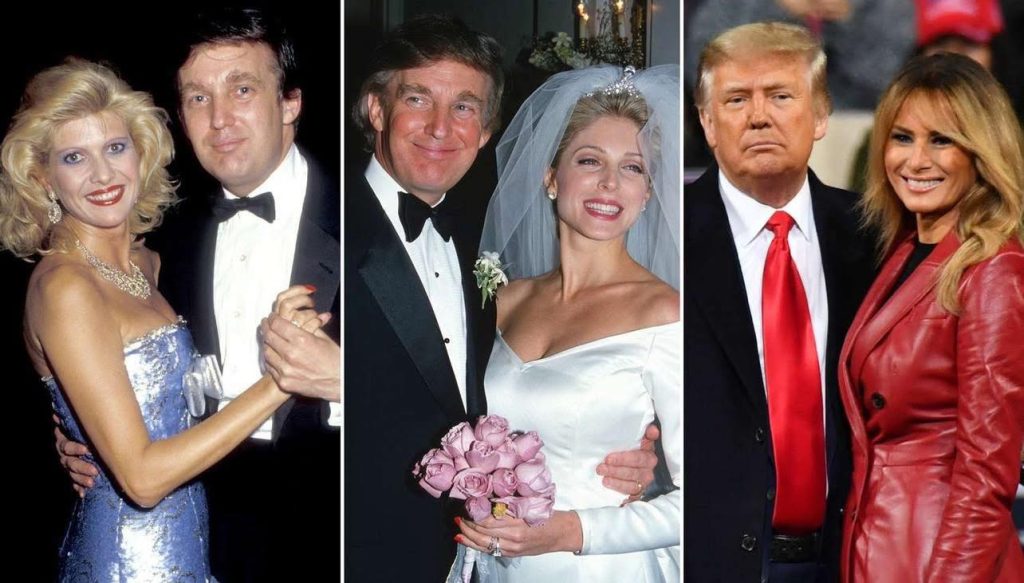
“Donald Trump is the son of an immigrant, the grandson of an immigrant, and married to an immigrant. In fact, TWO of his three wives were immigrants — proving yet again that immigrants will do the jobs even Americans are not willing to do!”
And it landed.
Loud.
Like a truth bomb wrapped in a joke wrapped in a nuclear warhead of irony.
This line wasn’t just comedy. It was surgical political commentary. It took 40 years of anti-immigrant rhetoric, family history, hypocrisy, and Home Alone 2 cameos — and spun them into a single punchline.
But that one line opens up a world of deeper questions:
Why does America, a country literally built by immigrants, fear immigrants?
How did a man with an immigrant family tree turn immigration into his political battering ram?
Why do immigrants often defend American democracy more passionately than those born here?
And why, dear God, did anyone think casting a future president in Home Alone 2 was a good idea?
To answer these questions, we must follow Mehdi Hasan’s speech to its roots — the history, the humor, the irony — and understand why this moment speaks volumes about America today.
CHAPTER 1: AMERICA THE IMMIGRANT — A COUNTRY THAT FORGETS ITS OWN ORIGIN STORY
America is a country with amnesia.
Beautiful amnesia.
Functional amnesia.
Like the kind of amnesia where someone forgets their car keys but remembers the lyrics to every Britney Spears song.
For centuries, Americans have celebrated Ellis Island, the Statue of Liberty, the Mayflower, and “Give me your tired, your poor,” while simultaneously having political meltdowns over the idea of… giving refuge to the tired and poor.
This contradiction is not new. It is older than the Electoral College. It is older than the filibuster. It is older than Mitch McConnell’s facial expression.
From the 1800s onward, every wave of immigrants — Irish, Italian, Jewish, Chinese, German, Mexican — was told the same thing:
“You are destroying the country.”
“Go back where you came from.”
“You are not American.”
Then, 50 years later, the same immigrants become symbols of the American dream — usually after they win a boxing match or invent a breakfast cereal.
So when Mehdi Hasan, himself an immigrant, stood on stage and said, “I love this country… because I chose America,” he tapped into one of America’s most profound truths:
Immigrants are often the fiercest defenders of American democracy because they see its value clearly. They lived without it.
This is the immigrant advantage: clarity.
They know what dictatorship looks like.
They know what censorship feels like.
They know what a fake election smells like.
And when they see American democracy wobbling like a drunk flamingo, they try to steady it — often while being yelled at by people whose only qualification for patriotism is being born near an Olive Garden.
CHAPTER 2: THE DONALD TRUMP IMMIGRATION PARADOX — A FAMILY TREE THAT DOESN’T KNOW ITS OWN GENES
Let’s talk about the irony that Mehdi Hasan pointed out — the kind that historians will write about with amusement for generations.
Donald Trump’s family history is a perfect melting pot of global immigration:
His grandfather? Immigrant from Germany.
His mother? Immigrant from Scotland.
His wives? Mostly immigrants.
His businesses? Powered by immigrants.
His golf courses? Built by immigrants.
His Mar-a-Lago staff? Staffed by immigrants.
But Donald Trump’s political brand?
Anti-immigration.
It’s like if Colonel Sanders hated chicken.
Or if Elon Musk hated attention.
Or if Joe Biden hated ice cream.
It makes no sense, and yet, here we are.
Trump’s family immigrated to America precisely because America offered opportunity. His businesses succeeded because America embraced diversity and labor mobility. His political rise was possible because immigrants strengthened America for centuries.
But somewhere along the line, the immigrant story of his family became a political inconvenience. And instead of embracing it, Trump rebranded himself as the sheriff guarding the border of a country his own ancestors crossed into.
This is why Mehdi Hasan’s line hit so hard. It wasn’t just a joke — it was a diagnosis.
It revealed what political scientists have long said:
Anti-immigrant rhetoric is rarely about facts. It’s about performance.
About fear.
About power.
About identity.
Trump’s speeches about immigrants “invading the country” are less about actual migration and more about signaling to a certain base. They turn complex economic realities into simple emotional slogans.
But when Mehdi Hasan jokes that “immigrants will do the jobs Americans won’t,” he isn’t just talking about hiring.
He’s talking about defending democracy, building communities, raising families, and revitalizing cities — work immigrants do every day without applause.
CHAPTER 3: MEHDI HASAN — THE IMMIGRANT WHO CHOSE AMERICA
Mehdi Hasan’s speech at the No Kings rally was one part comedy, one part political philosophy, and one part immigration love letter. It was rooted in a simple truth:
Some of the strongest defenders of American democracy are people who adopted this country, not people who inherited it.
When Mehdi said:
“I did not inherit America. I chose America,”
he summarized the immigrant perspective perfectly. Immigration is not passive. It is a decision. A sacrifice. A hope. A risk. An oath.
To immigrate is to leave your country behind — your language, your memories, your food, your childhood home — and say, “I believe there is something here worth building.”
Most native-born Americans never have to make that choice. They get America by default. They do not swear an oath of allegiance in adulthood. They do not memorize the Constitution for a citizenship test. They do not cry in relief when receiving a permanent residency card. They do not risk deportation, separation, or persecution.
Immigrants earn America.
And because they earn it, they defend it.
So when Mehdi says:
“I love America… because I chose America,”
he is speaking a deeper truth:
Immigrants often love America more fiercely than people who never had to fight for the right to call it home.
CHAPTER 4: THE HOME ALONE 2 PRESIDENCY — AN AMERICAN FAIRYTALE
There is something profoundly funny — almost poetic — about Mehdi Hasan referring to Trump as “the guy from Home Alone 2.”
Because that cameo truly encapsulates the surreal nature of American politics.
Think about it:
A future president appears in a children’s Christmas movie because he owned the hotel where they were filming, and he demanded a cameo as payment.
That cameo then becomes a meme that outlives several tax scandals, dozens of lawsuits, and one presidential term.
This is the United States of America:
a nation where you can go from “lost in New York” to “lost in the Oval Office” in one generation.
But the joke also reveals something deeper:
American politics has become a reality show — and Trump was its biggest star.
The policies, the scandals, the tweets — it all felt like a season finale that never ended.
So when Mehdi Hasan says he won’t let the “guy from Home Alone 2” destroy the American democratic project, he is not just mocking Trump. He is highlighting the absurdity of modern politics.
Democracy is fragile.
Complex.
Precious.
And it can be threatened not only by villains, but by entertainers who mistake public office for prime-time TV.
CHAPTER 5: IMMIGRANTS AS THE GUARDIANS OF DEMOCRACY
One of the most powerful themes of Mehdi Hasan’s speech is the idea that immigrants can be democracy’s strongest protectors.
This is not sentimental fluff. It is historically true.
Immigrants often become activists because they know the alternative: authoritarianism, monarchy, military rule, ethnic violence, corruption, or political repression. They have lived through it. Their families have experienced it. They understand why democracy matters.
Immigrants have led movements to:
-
Expand civil rights
-
Fight voter suppression
-
Protect free speech
-
Defend the Constitution
-
Resist authoritarianism
Immigrants do not take democracy for granted.
They take it personally.
So when Mehdi says:
“An oath that the guy down the street violates every morning and every night,”
he is not just making a joke. He is pointing out the painful irony that immigrants are held to higher standards of patriotism than some elected officials.
Immigrants have to prove their loyalty.
They have to prove their value.
They have to prove their right to be here.
Meanwhile, some people born into citizenship feel no obligation to protect the nation they were handed at birth.
This is why Mehdi’s speech resonates:
Immigrants are not America’s threat.
They are America’s renewal.
CHAPTER 6: THE CULTURE WAR OVER IMMIGRATION — A BATTLE BUILT ON MISUNDERSTANDING
America’s immigration debate is not really about immigration.
It’s about identity.
About fear.
About change.
The truth is simple:
Immigrants are not replacing Americans.
Immigrants are Americans.
But political rhetoric often plays on fears:
“They’re taking our jobs!”
“They’re changing our culture!”
“They’re invading!”
This is the oldest political trick in the book:
When a country changes, politicians blame the newest arrivals.
Yet the irony is that immigrants are not the ones threatening American democracy.
The threat comes from those who reject the idea of a multiracial, multicultural society — the very society America has always been destined to become.
Mehdi Hasan’s rally speech exposed the hypocrisy in the most comedic way possible:
A man descended from immigrants, married to immigrants, supported by immigrant labor — leading a movement against immigration.
It’s like a person standing on a ladder and yelling at the steps for letting people climb.
CHAPTER 7: THE MULTIRACIAL EXPERIMENT — AMERICA’S BRAVE AND FRAGILE DREAM
When Mehdi says:
“I love our multiracial, multicultural democratic experiment,”
he is describing something that most people do not realize:
America is the first major nation in history built on an idea rather than a single ethnicity.
France is French.
Japan is Japanese.
China is Chinese.
Egypt is Egyptian.
But America?
America is what happens when the world moves into one house, argues over who ate whose leftovers, and somehow holds elections anyway.
This multiracial democracy is not a flaw.
It is a miracle.
And like all miracles, it is fragile.
Throughout history, the biggest threat to America has never been immigration.
It has been the fear that diversity will destroy unity.
But diversity, when embraced, strengthens democracy.
It introduces new ideas.
New cultures.
New solutions.
New cuisines, which is honestly the best part.
Immigrants bring energy, ambition, and creativity into the system.
They keep America young.
Vibrant.
Dynamic.
The American dream is not dying.
It is expanding.
CHAPTER 8: THE COMEDY OF CONTRADICTION — WHY SATIRE REVEALS THE TRUTH
Satire works because it exposes the absurdity of the moment. It takes hypocrisy and stretches it until the stupidity becomes undeniable.
Mehdi Hasan’s joke at the rally did exactly that.
It reminded America of its biggest contradiction:
A country built by immigrants now struggles to accept immigrants.
And the man leading that resistance is himself the product of immigration — the living embodiment of the opportunities immigrants create.
This contradiction is hilarious.
And tragic.
And deeply American.
But satire is not just entertainment. It is political truth-telling.
When humor strikes the right nerve, it disarms the audience.
It forces them to laugh, then to think, then to question.
Political satire has always played this role — from Mark Twain to George Carlin, from Jon Stewart to Hasan Minhaj.
And now Mehdi Hasan joins that tradition.
CHAPTER 9: THE IMMIGRANT OATH — A PROMISE MANY TAKE MORE SERIOUSLY THAN THOSE BORN HERE
There is something powerful about immigrants taking the citizenship oath.
They raise their right hand and swear to:
-
Defend the Constitution
-
Support democracy
-
Renounce foreign powers
-
Participate in civic life
It is one of the most patriotic acts in America.
Meanwhile, some native-born Americans treat democracy like a gym membership:
Technically they have it, but they don’t use it.
Elections come and go.
Rights are gained and lost.
Institutions rise and fall.
And too many people shrug.
Immigrants do not shrug.
They show up.
They defend.
They participate.
They vote.
They protect the country that gave them a second chance.
This is the heart of Mehdi Hasan’s message:
America belongs to those who believe in it — not just those who were born into it.
CHAPTER 10: THE FINAL IRONY — THE THING THAT MAKES AMERICA GREAT
The greatest irony of all is this:
The diversity Trump attacked is the very thing that keeps America alive.
Immigrants are not taking America’s identity.
They are expanding it.
Immigrants are not weakening democracy.
They are strengthening it.
Immigrants are not the threat.
They are the antidote.
America is not a land frozen in time.
It is a living idea — constantly renewed by every newcomer who says, “I choose America.”
This is why Mehdi Hasan’s speech hit so hard.
It was not just a roast.
It was a reminder.
America’s greatest defenders are often the people who fought hardest to get here.
The people who love this country because they had to earn it.
The people who see democracy clearly because they lived without it.
The people who believe in America enough to build it, protect it, and keep it alive.
And so, in the end, the irony is complete.
A man descended from immigrants attacked immigration.
A man who chose America defended it.
A nation of immigrants continues to argue about immigrants.
And through it all, the multiracial democratic experiment survives — not because of who yells the loudest, but because of who believes the deepest.
Immigrants.
Citizens.
Dreamers.
Builders.
Defenders.
The real patriots.