
The Emotional Alchemy: How Celebrity Breakups and Deaths Captivate the Public
In the sprawling digital landscape of the 21st century, few phenomena stop the global scrolling thumb as consistently as news of a celebrity breakup or death. These events transcend the boundaries of mere gossip, transforming into powerful cultural moments that elicit profound, sometimes surprising, emotional reactions from millions who have never met the individuals involved. The year 2025 has become a case study in this dynamic, marked by a remarkable cluster of high-profile separations, from the amicable parting of Nicole Kidman and Keith Urban after 19 years to the dignified end of Lori Loughlin’s 28-year marriage. This trend is paralleled by the collective mourning for figures whose lives and legacies touched diverse corners of society, from reggae pioneer Jimmy Cliff to Friends actor Matthew Perry. This intense public engagement is not a sign of collective frivolity but a complex emotional and psychological process. It reveals how celebrities, through their work and public personas, become embedded in the tapestry of our personal lives and collective identity. The stories of their unions and endings act as powerful narratives that draw our attention because they mirror our own hopes, fears, and existential questions, all amplified by a media ecosystem expertly designed to engage our deepest feelings.
The Psychological Foundations of Public Attachment
To understand why the private lives of public figures command such public emotion, one must first explore the psychological bonds that form between audiences and celebrities. These connections are far more substantial than casual fandom; they are built on identifiable psychological frameworks.
- Parasocial Relationships: The Illusion of Intimacy
The cornerstone of this attachment is the parasocial relationship—a one-sided, psychological bond where a fan feels a sense of deep familiarity and connection with a media personality they do not know. This phenomenon, once nurtured primarily through films and television, has been exponentially intensified in the digital age. Social media platforms like Instagram and TikTok offer a curated, 24/7 window into a celebrity’s life, creating an unprecedented illusion of intimacy and peer-like access. We see their morning routines, share their professional triumphs, and witness their family milestones. When a couple like Emily in Paris co-stars Ashley Park and Paul Forman splits after two years, or when Benito Skinner announces the end of his nine-year relationship on his podcast, it does not feel like distant news. For followers invested in their journey, it can feel disorientingly personal, akin to learning about a fissure in a friend’s relationship. This explains the visceral shock many felt upon hearing of Kidman and Urban’s separation, with sources noting Kidman was “blindsided” and had tried to save the marriage. The parasocial bond makes the audience feel similarly blindsided, transforming a private event into a shared emotional experience. - Celebrities as Archetypes and Mirrors
Beyond personal connection, celebrities often serve as modern-day archetypes, embodying universal roles and narratives that resonate with our collective unconscious. They become the Jester (like Matthew Perry’s Chandler Bing), the Hero (an athlete like Kobe Bryant), the Lover (a iconic couple), or the Sage (a respected figure like Ruth Bader Ginsburg). Their stories provide templates for understanding our own lives. A celebrity divorce, therefore, is not just the end of a marriage; it can feel like the crumbling of a “happily ever after” archetype, prompting personal reflection on commitment and resilience. Conversely, a dignified split, such as Olivia Flowers and Alex Williams’s decision grounded in “deep mutual respect,” can reinforce positive archetypes of mature, compassionate closure. Their breakups and reconciliations become parables we use to interpret our own relational worlds. - Mortality, Meaning, and Collective Identity
The death of a celebrity forces a confrontation with universal human themes. It is a stark memento mori—a reminder of our own mortality and the fragility of life. The passing of a star like Heath Ledger at 28 or the sudden death of The Fresh Prince of Bel-Air’s young Floyd Roger Myers Jr. at 42 provokes existential unease, underscoring that fame and talent offer no protection from fate. Furthermore, celebrities often become woven into the collective identity of generations and communities. The death of David Bowie or Prince was not just the loss of a musician; it was the closing of a cultural chapter that defined a sense of self for their fans. Similarly, the passing of a national figure like Queen Elizabeth II or Princess Diana triggers a profound, shared sense of an era’s end, uniting people in communal nostalgia and reflection. We grieve for the person, but also for the part of our own history and identity that their presence helped shape.
The Mechanics of Emotional Amplification: Media, Narrative, and Design
While psychological predisposition creates the potential for emotional engagement, it is the modern media and cultural machinery that amplifies and directs this response, turning personal events into inescapable public phenomena.
- The Media Echo Chamber and Narrative Crafting
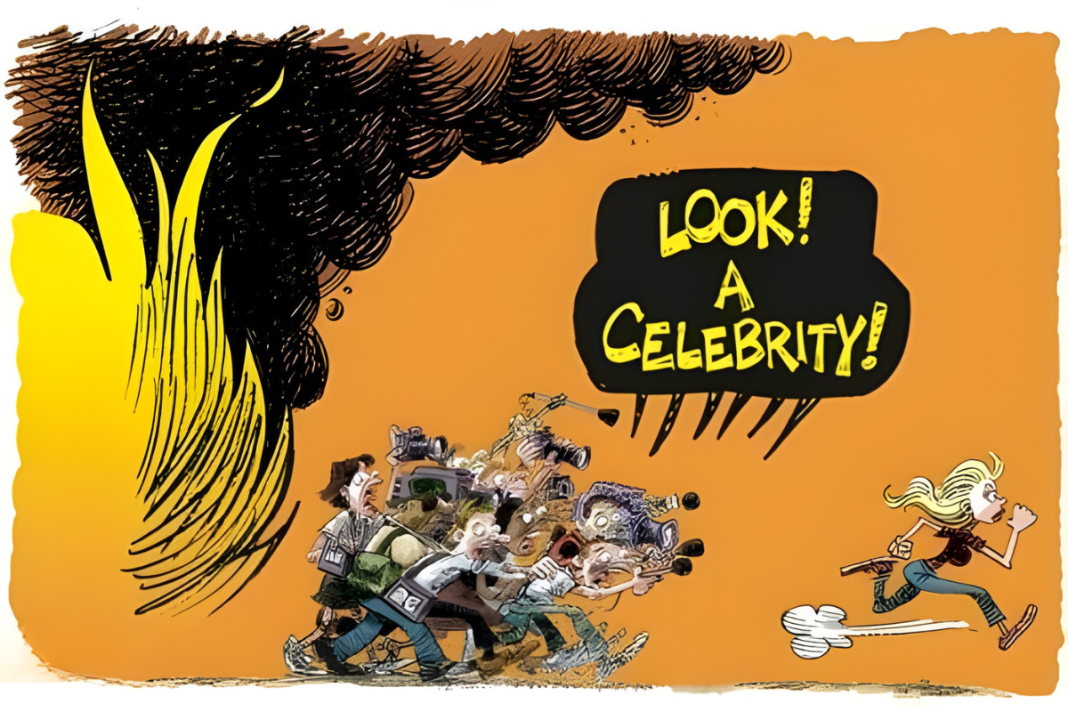
The news of a celebrity split or death triggers a vast, multi-platform media response. Outlets from Page Six to People to Vogue rush to break the news, provide context, dissect statements, and speculate on causes. This creates an echo chamber of grief or gossip, normalizing and amplifying the emotional response. The narrative is carefully shaped: Is this a tragic, messy divorce (like Johnny Depp and Amber Heard’s tumultuous split) or a “conscious uncoupling” (as Gwyneth Paltrow and Chris Martin framed theirs)? The 2025 trend, as noted in commentary, appears to be toward the latter—a “therapeutic” shift toward dignity, with statements emphasizing mutual respect, growth, and peaceful co-parenting. This framing itself influences public reaction, encouraging admiration rather than schadenfreude. Similarly, coverage of a death quickly establishes a legacy narrative, highlighting the celebrity’s contributions, struggles, and impact, as seen in the tributes to actors like Diane Ladd and pioneers like DNA scientist James Watson. - Emotional Design in the Digital Experience
The platforms on which we consume this news are not neutral conduits; they are engineered using principles of emotional design to maximize engagement. Emotional design is the practice of creating products and interfaces that evoke specific feelings to foster positive user experiences and deep connections. Social media feeds are the epitome of this. The instant notification about a breakup or death creates a visceral reaction. The ability to immediately like, comment, or share a news article or tribute post engages users on a behavioral level, making them active participants in the collective moment. Finally, posting a personal memory or using a commemorative hashtag (like#RIPMatthewPerry) serves a reflective function, allowing users to craft and project their own identity in relation to the event. This design loop ensures that emotional engagement translates directly into clicks, views, and sustained platform usage. - The Rituals of Public Mourning and Commentary
Public reaction crystallizes into new digital rituals. For deaths, fans create virtual shrines, share iconic clips, and recount personal stories of how the celebrity’s work affected them. For breakups, the court of public opinion convenes on Twitter and Reddit, analyzing social media activity (who unfollowed whom), dissecting lyrics for clues, and choosing sides. These rituals provide a sense of community and shared purpose, allowing individuals to process complex feelings within a supportive, if virtual, crowd. The intense backlash against figures perceived as responsible for a breakup, such as the fan reaction against Jonah Hill after allegations from an ex-partner or the sides taken during the Khloé Kardashian and Tristan Thompson saga, demonstrates how these narratives fuel moral judgment and collective storytelling.
Historical Echoes: The Enduring Nature of Public Fascination
The intense public fascination with the lives and deaths of the famous is not a novel product of the internet age but a persistent feature of human culture, amplified by changing technologies.
- The Print Era and the Birth of Mass Market Gossip
Before Twitter feeds, there were newspaper gossip columns. The very public, acrimonious divorce of actors Burt Reynolds and Loni Anderson in the 1990s played out in tabloids and on talk shows, with Reynolds making biting comments about their marriage, demonstrating how media could fuel and prolong personal conflict for public consumption. The tragic death of Princess Diana in 1997 may represent the pre-internet apex of global public mourning, with an unprecedented outpouring of grief, floral tributes, and media coverage that captivated and unified people across the world in a way that foreshadowed today’s digital vigils. - The Rise of the 24-Hour News Cycle and Reality TV
The advent of cable news and the 24-hour news cycle in the late 20th century intensified the magnification of celebrity events. The marriage (72 days) of Kim Kardashian and Kris Humphries, orchestrated and dissected for reality television, marked a new era where the line between private life and public content blurred entirely. Breakups became season finales, and personal turmoil became the engine of fame. This established a blueprint where relationship milestones are not just reported but are often integral to a celebrity’s brand and narrative. - The Digital Acceleration
The internet and social media have democratized and exponentially accelerated these dynamics. A breakup announcement moves from a press release to a direct Instagram Story in seconds, as when Ariana Biermann announced her split from Hudson McLeroy. Grief is expressed in real-time across global platforms. The death of musician Chester Bennington in 2017 saw fans worldwide simultaneously sharing his music and messages of despair, illustrating how digital tools can scale intimate emotion to a planetary level. This historical progression shows that while the speed and scale have changed, the core human impulse to connect with, judge, and mourn through the figures in our shared cultural landscape has remained constant.
The following table contrasts historical and contemporary examples to illustrate this evolution in scale and intimacy:
| Era | Breakup Example | Death Example | Media & Public Engagement |
|---|---|---|---|
| Pre-Internet (1980s-1990s) | Burt Reynolds & Loni Anderson’s ugly, public divorce played out in tabloids and TV interviews. | Princess Diana’s death (1997) triggered a global outpouring of flowers, candlelight vigils, and wall-to-wall TV coverage. | Engagement was mass but monolithic. Reaction was funneled through major media (TV, print) and physical gatherings. The narrative was controlled by editors. |
| Early Digital / Reality TV (2000s-2010s) | Kim Kardashian’s 72-day marriage to Kris Humphries was a reality TV storyline, driving ratings and magazine covers. | Michael Jackson’s death (2009) broke news online, spurred massive TV tributes, and saw an early surge of social media reaction. | Engagement became interactive and fragmented. 24-hour news cycles and reality TV created constant content. Online forums and early social media (MySpace, Facebook) allowed fan discussion. |
| Social Media Era (2020s-Present) | 2025 splits are announced via joint statements or personal podcasts, then dissected in real-time across TikTok, Reddit, and Instagram. | Matthew Perry’s death (2023) trended worldwide within minutes; fans instantly shared clips, memes, and personal tributes across all platforms. | Engagement is instant, global, and participatory. The public are co-creators of the narrative. Emotional design of platforms optimizes for sharing and reaction, creating collective emotional events. |
The Sociocultural Function: Why This Fascination Matters
This collective attention to celebrity endings serves several deeper sociocultural functions beyond mere entertainment. It acts as a social safety valve, providing a culturally acceptable outlet for exploring powerful emotions like grief, betrayal, and disappointment at one step removed from our own lives. The tears shed for a beloved actor or the fervent debate over a divorce allow for emotional expression and catharsis within a shared context.
Furthermore, these events prompt collective value negotiations. The public reaction to a breakup often involves judging the behavior of those involved against societal norms. The praise for “dignified” splits in 2025 reflects and reinforces contemporary values around respectful dissolution, therapy, and mature conflict resolution. Conversely, the backlash against partners accused of betrayal or abuse reinforces social boundaries.
Finally, on an individual level, these stories serve as mirrors for self-reflection. They prompt questions: How would I handle such a loss? What do my reactions to this divorce say about my own views on relationships? The death of a celebrity our own age, as noted in reflections on Matthew Perry’s passing, forces a direct and unsettling confrontation with our own life choices and mortality. In this way, the lives and deaths of strangers become tools for navigating our own existential journeys.
Conclusion
The powerful emotional alchemy that transforms celebrity breakups and deaths into global events is a multifaceted phenomenon rooted in enduring human psychology and supercharged by modern media design. It begins with the parasocial bonds and archetypal narratives that make public figures feel like intimate parts of our personal worlds. These bonds are then amplified by a media ecosystem—from digital tabloids to algorithmically driven social platforms—that is meticulously crafted to capture and exploit our emotional attention for engagement. While the scale and speed of this process have exploded with digital technology, history shows that the public’s desire to share in the joys and sorrows of the famous is a timeless constant, evolving from print gossip to reality TV storylines to today’s instantaneous global conversations.
Ultimately, the intense attention paid to these events is not trivial. It represents a complex, communal processing of universal themes—love, loss, fidelity, legacy, and mortality—through the compelling, larger-than-life narratives that celebrities provide. In a fragmented world, these moments of collective feeling, whether of mourning or moral judgment, create temporary but powerful points of shared human experience. They remind us that the stories we tell about the lives and endings of others are, in the end, reflections of our own deepest hopes, fears, and searches for meaning.