
How two nations are quietly capitalizing on America’s missteps, and why history says we should have seen this coming.
Let me paint you a picture.
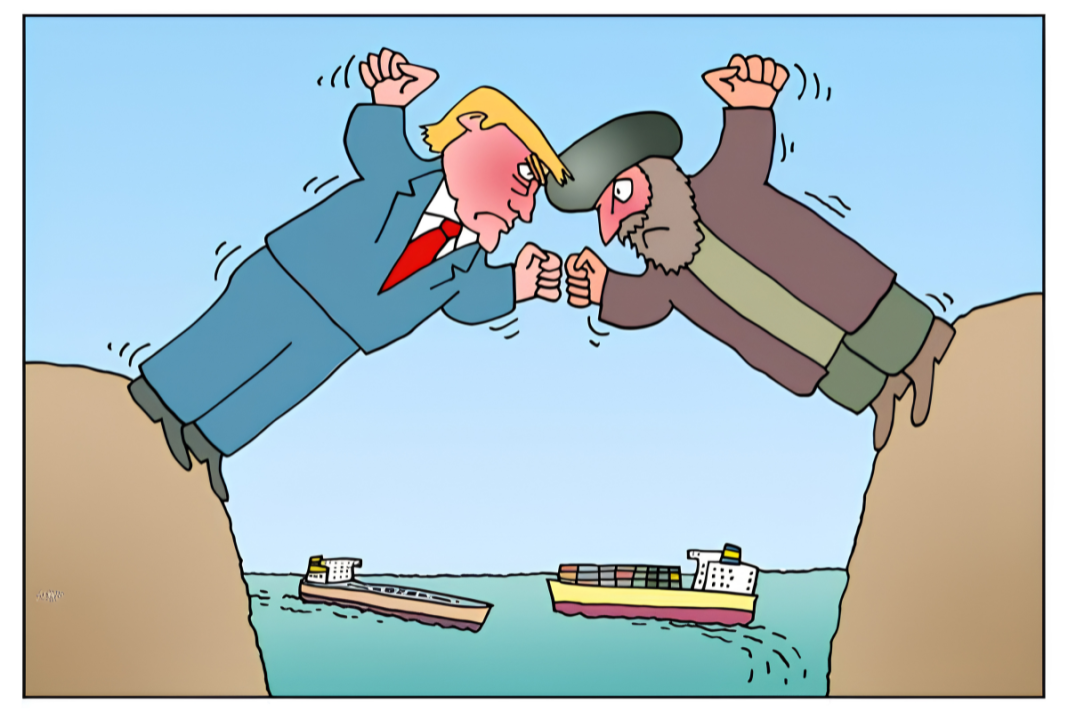
Imagine you own the only bridge in town. Every single truck carrying goods has to cross your bridge. You get to decide who crosses, when they cross, and how much they pay. Now imagine the biggest power in the world — the one that used to guard that bridge — suddenly gets distracted, starts fights with the wrong people, and slowly walks away from the table.
What would you do?
If you’re Iran, you’d sit down, smile, and start writing the rules yourself.
That’s essentially what’s happening right now with the Hormuz Agreement — a deal that could reshape how the world’s most important oil chokepoint is managed. And if the reports are accurate, Iran is about to walk away with a level of control that would have been unthinkable just a decade ago.
But here’s the thing — this didn’t happen overnight. This is the result of years of American foreign policy mistakes, missed opportunities, and strategic blunders that left the door wide open for countries like Iran and China to step in and rewrite the playbook.
Let’s break it all down.
First Things First — What Exactly is the Hormuz Agreement?
The Strait of Hormuz is a narrow waterway between Iran and Oman. It’s only about 21 miles wide at its narrowest point. But don’t let its size fool you — roughly 20% of the world’s oil supply passes through this tiny corridor every single day. We’re talking about approximately 21 million barrels of oil daily.
That’s not just a shipping lane. That’s the jugular vein of the global economy.
For decades, the United States Navy — specifically the Fifth Fleet based in Bahrain — has been the unofficial “security guard” of this strait. American aircraft carriers, destroyers, and submarines have patrolled these waters to ensure that oil flows freely to the world.
But things are changing.
Recent reports from multiple sources, including Al Jazeera, Reuters, and regional analysts, suggest that a new framework agreement — informally called the “Hormuz Agreement” — is in its final stages. The deal reportedly involves Iran, Oman, and possibly China as a behind-the-scenes partner.
And here’s the kicker — Iran may end up with significant operational control over how the strait is managed.
This includes:
- Navigation protocols for commercial vessels.
- Security arrangements within the strait.
- Fee structures or transit agreements for ships passing through Iranian territorial waters.
- Environmental regulations that could be used as leverage to slow down or restrict certain shipments.
If this deal goes through the way it’s being reported, Iran won’t need to fire a single missile to control the world’s oil supply. They’ll just need a pen and a contract.
How Did We Get Here? The American Mistakes That Opened the Door
To understand how Iran ended up in this position, you have to rewind the clock and look at the series of strategic errors the United States made over the past two decades.
Mistake #1: The Iraq War (2003) — Removing Iran’s Biggest Enemy
This is probably the most consequential American foreign policy blunder of the 21st century.
Before 2003, Saddam Hussein’s Iraq was Iran’s biggest regional rival. The two countries fought a brutal eight-year war from 1980 to 1988 that killed over a million people. As long as Saddam was in power, Iran had to spend enormous resources watching its western border.
Then the United States invaded Iraq, toppled Saddam, and dismantled the entire Iraqi military and government structure.
What happened next? Iran walked right in.
Today, Iran has enormous influence over Iraq’s government, military, and militia groups. The very country that was supposed to become a beacon of American-style democracy in the Middle East became Iran’s closest ally.
As Flynt Leverett, a former CIA analyst and National Security Council official, famously wrote: “We essentially handed Iraq to Iran on a silver platter.”
Without the Iraq War, Iran would still be boxed in between a hostile Iraq and a hostile Afghanistan. Instead, America removed both threats (yes, the Taliban in Afghanistan was also hostile to Iran) and gave Iran a clear path to regional dominance.
Mistake #2: Walking Away from the Nuclear Deal (JCPOA) — 2018
In 2015, after years of painstaking negotiations, the United States, along with the UK, France, Germany, Russia, and China, signed the Joint Comprehensive Plan of Action (JCPOA) — commonly known as the Iran Nuclear Deal.
The deal was simple: Iran would limit its nuclear program, and in return, the world would lift economic sanctions.
It wasn’t a perfect deal. Critics rightly pointed out that it didn’t address Iran’s missile program or its support for groups like Hezbollah. But it was a deal. It was a framework. It was a starting point.
Then, in May 2018, President Trump unilaterally withdrew from the agreement.
Here’s what that decision accomplished:
- Iran restarted its nuclear enrichment program and is now closer to weapons-grade uranium than ever before.
- America’s European allies were furious because their companies had already signed billions of dollars in contracts with Iran.
- China and Russia stepped in to fill the economic vacuum, signing massive oil and infrastructure deals with Tehran.
- Iran lost all incentive to negotiate with the United States in good faith because they learned that any deal could be torn up by the next president.
As Trita Parsi, founder of the National Iranian American Council and author of “Losing an Enemy: Obama, Iran, and the Triumph of Diplomacy,” noted: “By walking away from the deal, the U.S. didn’t isolate Iran — it isolated itself.”
Mistake #3: The “Pivot to Asia” — Leaving a Power Vacuum in the Middle East
Starting with the Obama administration and accelerating under both Trump and Biden, the United States has been slowly shifting its military and diplomatic focus away from the Middle East and toward the Indo-Pacific region to counter China.
On paper, this makes sense. China is America’s biggest long-term strategic competitor.
But in practice, the “Pivot to Asia” left a massive power vacuum in the Middle East. And as any student of history knows, power vacuums don’t stay empty for long.
Iran saw the opportunity and seized it. They expanded their influence in Iraq, Syria, Lebanon, and Yemen through proxy groups. They deepened military cooperation with Russia. And most importantly, they signed a 25-year strategic partnership with China worth an estimated $400 billion.
That China deal is critical to understanding the Hormuz Agreement. China needs Iranian oil. Iran needs Chinese money and political protection. And both of them need the Strait of Hormuz to stay open — but on their terms, not America’s.
Mistake #4: Inconsistent Alliances — Confusing Friends and Enemies
One of the most damaging patterns in American Middle East policy has been inconsistency.
- The U.S. armed Saddam Hussein in the 1980s, then invaded his country in 2003.
- The U.S. called Egypt’s Hosni Mubarak a “friend” for 30 years, then supported his removal during the Arab Spring in 2011.
- The U.S. sold billions in weapons to Saudi Arabia while simultaneously criticizing Saudi human rights abuses.
- The U.S. sanctioned Iran while buying oil from countries that openly violated those same sanctions.
This inconsistency sent a clear message to every country in the region: America is not a reliable long-term partner.
And when your allies can’t trust you, they start making their own deals. That’s exactly what’s happening now with the Hormuz Agreement.
The History Lesson Nobody Learned — The Suez Canal Crisis of 1956
If the Hormuz situation sounds familiar, it should. We’ve seen this movie before.
In 1956, Egyptian President Gamal Abdel Nasser nationalized the Suez Canal — another critical global chokepoint that was controlled by British and French interests. Britain and France, along with Israel, launched a military operation to take it back.
The United States, under President Eisenhower, refused to support the operation and forced all three countries to withdraw.
The result? Egypt kept control of the canal. Britain and France lost their status as global superpowers. And the entire balance of power in the Middle East shifted permanently.
The lesson from Suez was clear: Whoever controls the chokepoint controls the conversation.
Iran has studied this history carefully. They know that the Strait of Hormuz is their Suez Canal. And they know that if they play their cards right, they can use it as leverage for decades to come.
China’s Role — The Silent Partner
You can’t talk about the Hormuz Agreement without talking about China.
China is the world’s largest importer of oil. Roughly 40% of China’s oil imports pass through the Strait of Hormuz. For Beijing, ensuring the security of this waterway is not a luxury — it’s a national survival issue.
For years, China was happy to let the American Navy patrol the strait. It was free security. But as U.S.-China relations have deteriorated — especially after the trade wars, the Taiwan tensions, and the tech sanctions — China realized it could no longer depend on America to keep the oil flowing.
Enter the China-Iran 25-Year Strategic Partnership signed in 2021. Under this agreement:
- China invests heavily in Iran’s energy, transportation, and telecommunications infrastructure.
- Iran provides China with discounted oil (often sold in Yuan, not dollars — a direct challenge to the petrodollar system).
- Both countries cooperate on military and intelligence matters in the Persian Gulf region.
If the Hormuz Agreement gives Iran significant control over the strait, China effectively gets a “back door” guarantee that its oil supply will never be cut off — even in a conflict with the United States.
This is a strategic masterstroke by both countries, and it was made possible almost entirely by American mistakes.
What Does This Mean for the Rest of the World?
If Iran secures major control over the Strait of Hormuz through this agreement, the ripple effects will be enormous:
For Oil Prices
Any time Iran wants to make a political statement, they can subtly slow down traffic through the strait. Even a 24-hour disruption could spike global oil prices by 10-20%. This gives Iran incredible economic leverage over Europe, Japan, South Korea, and India — all of which depend heavily on Gulf oil.
For the U.S. Dollar
The petrodollar system — where oil is bought and sold in U.S. dollars — has been one of the pillars of American economic power since the 1970s. If Iran and China use the Hormuz Agreement to push more oil trades into Yuan or other currencies, it could accelerate the slow erosion of the dollar’s global dominance.
For Regional Politics
Saudi Arabia, the UAE, and other Gulf states will be forced to recalculate their relationships. Some may move closer to China. Others may try to negotiate their own deals with Iran. The American “security umbrella” that has defined Gulf politics for 50 years is getting thinner by the day.
For Bangladesh and South Asia
Countries like Bangladesh, India, and Pakistan import significant amounts of oil and LNG that transit through the Strait of Hormuz. Any disruption or price increase directly impacts fuel prices, electricity costs, and the overall economy in these nations. Bangladesh, in particular, with its growing energy demands and reliance on imported fuel, could feel the squeeze.
The Bottom Line
The Hormuz Agreement is not just a regional deal. It’s a global power shift happening in slow motion.
Iran and China didn’t create this opportunity out of thin air. America handed it to them — through the Iraq War, through walking away from the nuclear deal, through the pivot to Asia, and through decades of inconsistent alliances.
History has a way of repeating itself. Just as Egypt seized the Suez Canal when the old colonial powers got weak and distracted, Iran is now positioning itself to control the Strait of Hormuz at the exact moment when American influence in the region is at its lowest point in decades.
The real question isn’t whether Iran will get this control. The question is: What is America going to do about it?
Because right now, the answer appears to be: not much.
And that silence speaks louder than any aircraft carrier ever could.
What do you think? Is America losing its grip on the Middle East, or is this just a temporary shift? Drop your thoughts in the comments below.
Sources & Further Reading:
- Parsi, Trita. “Losing an Enemy: Obama, Iran, and the Triumph of Diplomacy.” Yale University Press, 2017.
- Leverett, Flynt & Hillary Mann Leverett. “Going to Tehran: Why America Must Accept the Islamic Republic of Iran.” Metropolitan Books, 2013.
- Al Jazeera — “The Strait of Hormuz: The World’s Most Important Oil Chokepoint.”
- Reuters — “China-Iran 25-Year Deal.”
- U.S. Energy Information Administration (EIA) — “World Oil Transit Chokepoints.”
- Council on Foreign Relations — “The Suez Crisis of 1956.”