
Is Globalization Dying — or Mutating? A Deep Dive into the New Shape of the World
For more than three decades, globalization has been one of the most powerful forces shaping our world. It defined how nations traded, how companies built products, how people migrated, and how ideas spread. From the fall of the Soviet Union to the rise of China, from the birth of the European Union to the explosion of the internet, globalization created an era of unprecedented connection. Factories moved overseas. Supply chains wrapped around the world. Nations opened their markets. The world grew smaller, faster, and more tightly woven.
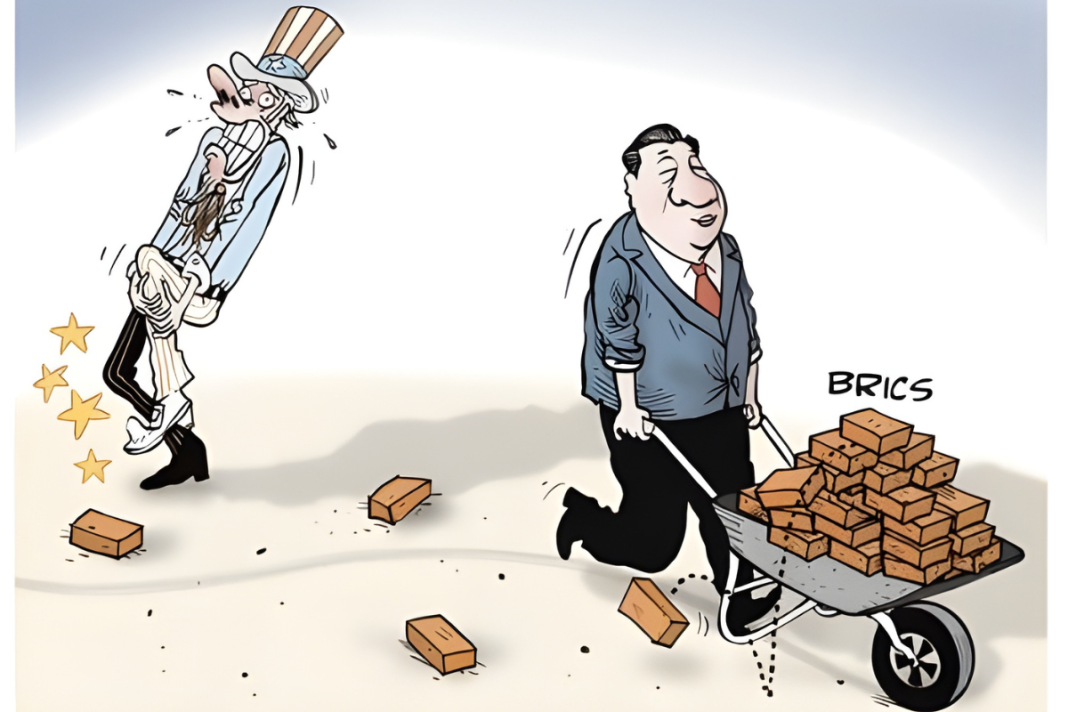
But today, something has shifted. Headlines announce that globalization is “over,” that we are returning to borders, blocks, and rivalries. Commentators speak of “de-coupling,” “de-globalization,” or even “economic Cold War.” And at the center of this transformation stand two major forces: the disruptive policies of Donald Trump and the long-term strategic vision of China.
Are we witnessing the death of globalization? Or is it simply changing shape?
Most experts now agree on one important truth: globalization is not dying, but it is mutating. It is becoming slower, more regional, more strategic, and far more political. The giant integrated system of the 1990s and early 2000s is fading. In its place, a more fragmented world is emerging — one divided into competing networks built by the United States, China, and regional blocs like the European Union or ASEAN.
To understand this transformation, we must look at how we got here, who is shaping the new system, how businesses are reacting, and what this means for the future of the global economy.
This is the story of the great mutation of globalization.
The Old Globalization: A World Built on Efficiency and Integration
The globalization of the late 20th century was built on a simple idea: the world should be one large, interconnected marketplace. Nations lowered tariffs, joined trade bodies, privatized industries, and opened their economies. The fall of the Soviet Union merged East and West into a single economic system. China entered the World Trade Organization in 2001, unleashing the world’s largest labor force into global markets. Corporations rapidly spread supply chains across continents, chasing lower costs and maximum efficiency.
A new world emerged where raw materials came from Africa, were manufactured in China, were assembled in Mexico, and were sold in Europe or the United States. The model was clear: China manufactured, the U.S. consumed, Europe designed, and the developing world supplied.
This era created extraordinary growth. Hundreds of millions escaped poverty. Countries like China, Vietnam, and India rose to global economic influence. Consumers in wealthy nations enjoyed low prices and endless choices. The internet made information flow unstoppable.
But this integrated system also created deep vulnerabilities.
Countries became dependent on far-away suppliers. A crisis in one part of the world could shut down factories on the other side of the planet. Jobs in developed economies disappeared. Inequality grew. And the United States, the chief architect of globalization, realized it had also become dangerously reliant on its rivals.
The weaknesses of globalization were visible long before the world acknowledged them. But the real turning point came from two unexpected directions: the disruptive actions of Donald Trump and the strategic rise of China.
The Trump Shock: How One Presidency Broke the Old System
It is impossible to understand today’s global transformation without looking at Donald Trump’s policies. Whether loved or hated, Trump played the role of a wrecking ball against the old globalization.
For decades, U.S. politicians criticized offshoring, unfair trade practices, and manufacturing decline, but no one acted. Trump did.
He imposed sweeping tariffs not only on China, but also on Canada, Mexico, Europe, and many Asian nations. These tariffs were not symbolic. They fundamentally disrupted long-established supply chains and raised U.S. effective tariffs to nearly 20% — the highest in modern history. Companies that had spent thirty years perfecting global production suddenly faced uncertainty and higher costs.
Trump also withdrew the United States from major international agreements, including the Paris Climate Accord and UNESCO, and he weakened the influence of the World Trade Organization, an institution that had long been the referee of global trade. By challenging these pillars of multilateral cooperation, Trump signaled that the age of borderless economic integration was over.
The most dramatic confrontation was the tariff war with China. The United States accused China of intellectual property theft, forced technology transfer, unfair subsidies, and predatory trade practices. Instead of negotiation, Trump chose confrontation. Tariffs became a political weapon, and China responded with its own measures.
This conflict forced companies around the world to rethink where they built their products. For the first time in a generation, multinational firms moved production out of China, not because of cost, but because of political risk. Several nations — India, Vietnam, Mexico — became new targets for investment. Supply chains had to be redesigned from scratch.
Business leaders spoke openly about how uncertainty was forcing them to diversify. Hyundai’s global CEO admitted that tariffs and political pressure were forcing them to change production strategies entirely. Automakers, electronics companies, chipmakers, and even agricultural suppliers all felt the shock waves.
Even after Trump left office, the shift did not reverse. The Biden administration continued many of the same tariffs and introduced new export controls on advanced technology. Both Republicans and Democrats now agree that the era of free-flowing globalization is over.
The rules had changed. And no country understood this better than China.
China’s Counter-Strategy: Building a Parallel Global System
While Trump was breaking old systems, China was quietly building new ones.
China’s long-term strategy has been clear: reduce dependence on the West, secure its own growth, control critical technologies, and build an alternative global network that it can lead. The Belt and Road Initiative (BRI) — a massive global infrastructure program — was a key part of this strategy.
Through BRI, China has financed ports, highways, railways, power plants, and digital networks across Asia, Africa, Latin America, and Europe. This is not charity. It is a way to reshape global trade routes, create political influence, and reduce reliance on Western-controlled systems.
China also positioned itself at the heart of critical supply chains. It now dominates solar panel production, battery manufacturing, electric vehicle components, rare earth minerals, and many clean energy technologies. This dominance gives China enormous leverage in the global shift toward a green economy.
Even as Western nations talk about “decoupling,” China’s exports continue to grow. In several industries — including electronics, machinery, and renewable energy — China is more influential than ever. The country has mastered a model where it manufactures not only for the world, but increasingly in the world. Chinese companies build factories in Europe, Southeast Asia, Africa, and Latin America, diversifying their own risks while strengthening their global presence.
China’s message to developing nations is simple: globalization should not be a Western-led system. It should be a multipolar system where many countries have influence. Chinese scholars argue that Western globalization has benefited some countries while disadvantaging others. Their solution is a more inclusive form of global integration — but one where China is a central architect.
In many ways, Trump and China — despite being rivals — together accelerated the end of the old model. Trump disrupted it; China reshaped it.
The result is a world that is not less global, but differently global.
Slowbalization: The World Slows Down but Does Not Stop
The term “slowbalization” was coined by economists to explain the new global landscape. It does not mean globalization is reversing. It means it is slowing, changing direction, and becoming more selective.
Before the 2008 financial crisis, trade in goods grew twice as fast as global GDP. Factories and supply chains expanded at an incredible pace, linking distant countries in a seamless network. After the crisis, that growth slowed dramatically. By the mid-2010s, the ratio of trade to GDP had stopped rising. In some countries, like China, it even fell.
But this slowdown is not due to trade collapsing. Instead, domestic economies — especially China’s — are growing faster than trade flows. China used to rely heavily on exports. Today, its domestic market has grown so large that foreign trade is a smaller share of its economy.
At the same time, a new type of globalization is accelerating: the globalization of intangibles.
While the movement of physical goods has slowed, the movement of data, ideas, knowledge, intellectual property, and digital services has exploded. Data flows have grown more than forty percent every year for the past decade. Universities exchange students across continents. Tech companies collaborate across borders. Digital platforms operate everywhere.
This shift from “globalization of stuff” to “globalization of knowledge” is one of the largest economic transformations in history. It means globalization has not died; it has simply changed form.
Regionalization: When Nations Choose Their Neighbors Over the World
One of the clearest signs of globalization’s mutation is the rise of regional trade networks.
The old model was simple: China produced, and the United States consumed. Today, that model is breaking. Trade inside Asia is growing faster than Asia’s trade with the West. China buys more from Asia, and Asia buys more from China. Middle Eastern countries are deepening ties with China and India. African nations are forming their own continental free trade networks.
As Georges Elhedery of HSBC explains, the world is shifting from a system where China manufacturers for the world to one where China manufactures in the world. Similarly, the old idea of “the U.S. consumes” is being replaced by regional consumption in Asia, Africa, and Latin America.
Regional agreements like RCEP in Asia and the African Continental Free Trade Area are evidence of this shift. Countries are not retreating from trade; they are simply choosing closer, more reliable partners after seeing the dangers of long and fragile supply chains.
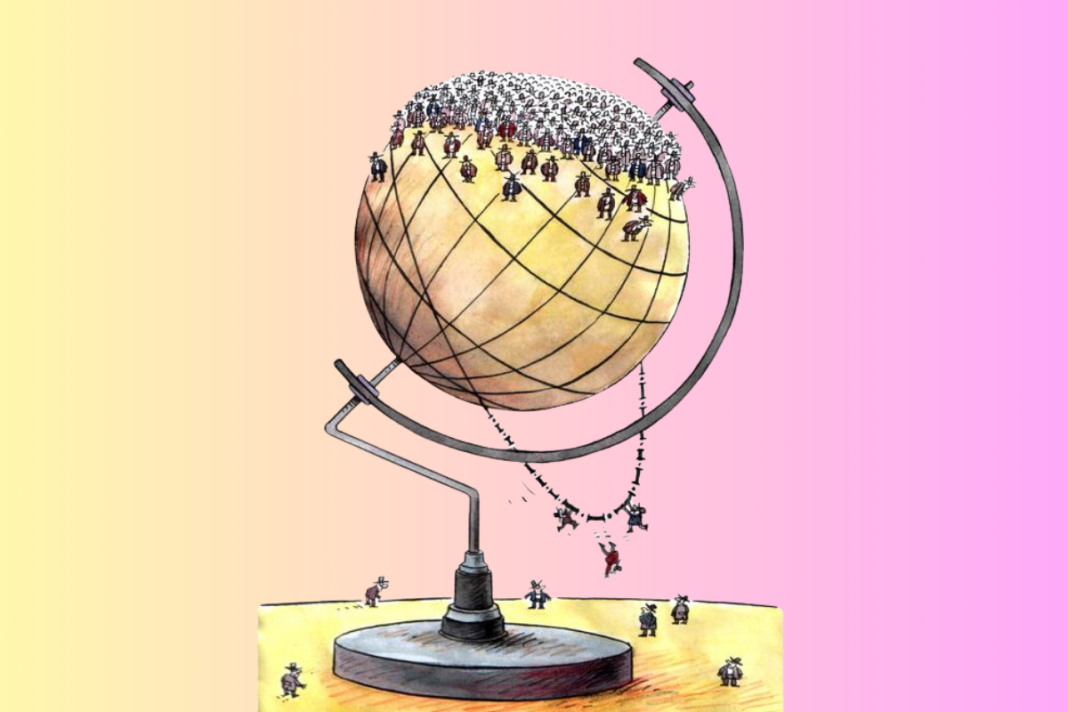
The global system is breaking into several smaller systems — each with its own rules, institutions, and leaders.
The Real Cost of the New Globalization
The mutation of globalization is not free. It comes with real economic costs, and businesses and consumers are already feeling them.
The most significant cost is higher prices. For decades, globalization reduced prices by producing goods where labor was cheap and factories could scale massively. When countries diversify supply chains or bring manufacturing closer to home, costs rise.
The CEO of Singapore’s sovereign wealth fund, GIC, said, “We will have to pay more for resilience.” The phrase has become a quiet warning for the next decade. Building redundancy — having multiple suppliers, multiple factories, multiple routes — is expensive. But companies now see it as necessary.
Another cost is slower economic growth. Globalization boosted growth by enabling countries to specialize and trade freely. When trade slows or becomes more politicized, growth follows the same pattern. Countries like Germany, Japan, and South Korea — heavily dependent on exports — are especially vulnerable.
Fragmentation also creates inefficiencies. Multiple standards, multiple networks, and competing political blocks make cooperation harder. Companies must navigate a more uncertain world, where political pressure is as important as economic logic.
And perhaps the greatest cost is geopolitical. Fragmentation makes it harder to solve shared global problems like climate change. Clean energy requires cooperation across borders. But rivalry between the United States and China threatens to slow progress. As energy expert Lei Zhang warned, if geopolitical battles overshadow cooperation on clean technology, the world may lose decades of climate progress.
These are not small risks. They shape the future of prosperity, stability, and global security.
The New Rules of the Mutating Global Order
A new world is emerging from the ashes of the old one, shaped by two major forces but influenced by many.
The first force is the United States, whose policies under Trump — and continued under Biden — mark a decisive shift away from the open-market ideology that defined post-Cold War America. Tariffs, export controls, and reshoring incentives are now bipartisan policy.
The second force is China, whose growing economic power, infrastructure investments, supply chain dominance, and advocacy for multipolarity challenge the U.S.-centric order.
Surrounding them are regional blocs strengthening their own systems. Europe is pushing for “strategic autonomy.” Asian nations are weaving tighter regional trade agreements. African countries are building continental institutions. The Middle East is forming stronger ties with Asia.
Multinational corporations now operate in a world where political risk is equal to financial cost. They must map their supply chains not only by efficiency but by strategic safety. They must consider not only consumer markets but also geopolitical alignments.
The new globalization is not flat; it is uneven. It is not borderless; it is bounded by political walls. It is not purely economic; it is strategic.
But it is still globalization — just a different kind.
Is Globalization Dying? The Final Answer
After examining the political forces, economic data, historical context, and structural changes, the answer becomes clear.
Globalization is not dying.
It is mutating — deeply, drastically, and permanently.
The old model of hyper-integration, built on unlimited efficiency and global harmony, is fading. In its place, a new system is rising, shaped by competition, regional alliances, political pressure, and technological transformation.
This new world is more fragmented, but not isolated. More regional, but not closed. More political, but not disconnected.
The path ahead will not be smooth. Companies, governments, and individuals will face uncertainty, rising costs, and new risks. But they will also find new opportunities as different regions build their own networks and develop their own economic strengths.
Trump’s protectionism and China’s strategic expansion were not accidental forces; they were deliberate choices that accelerated the end of old globalization and marked the beginning of a new phase. These two actors — rivals on the world stage — are ironically the twin architects of the new era.
The world will not return to the simple, seamless, interconnected marketplace of the 1990s. But it will not retreat into isolated national economies either.
The future belongs to a multi-layered, multi-speed, multi-centered form of globalization — one that reflects the complexity of a world no longer led by a single power or a single model.
In this new chapter, the question is no longer “Is globalization ending?”
The question now is:
How will nations, companies, and people adapt to the new shape of globalization as it mutates into something far more complex than anything we have seen before?