

Introduction: The Silent Wealth Transfer
Imagine this: Sarah, a Mississippi retail worker, pays a $35 overdraft fee because her $8 coffee transaction cleared before her paycheck did. Across town, David juggles five “buy now, pay later” loans he acquired through seamless app taps, unaware how close he is to a debt spiral. Meanwhile, Maria avoids banks altogether, spending $629 to repay a $300 payday loan—an effective APR of 572% .
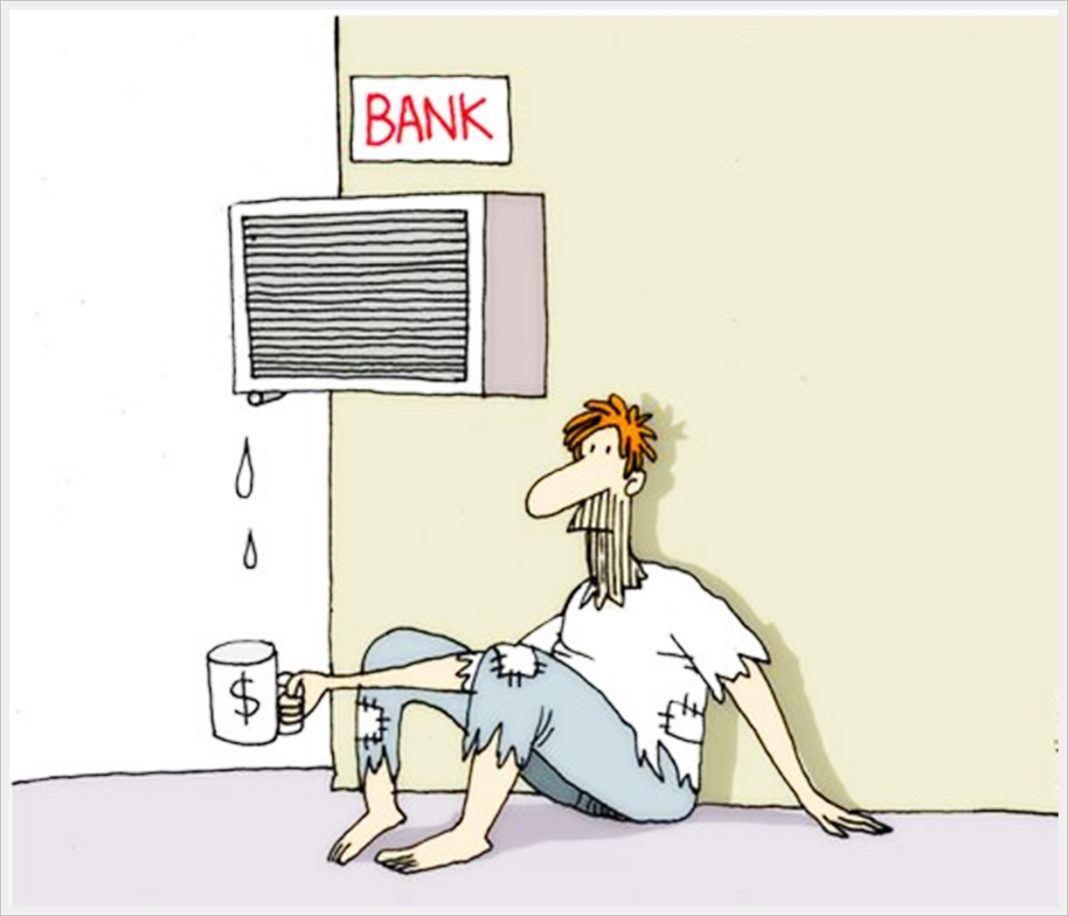
These aren’t just isolated financial missteps; they’re symptoms of a system where banking practices quietly transfer wealth from those who have the least to those who have the most. While we vigilantly watch our spending on groceries and utilities, the most significant drains on our wealth often come from the very institutions we trust to safeguard our money.
This article will illuminate the hidden mechanisms banks use to slowly erode your financial foundation and provide concrete strategies to fight back.
The Direct Drains: Fees and Penalties That Compound Poverty
1. The Overdraft Domino Effect
Overdraft fees represent one of the most blatant wealth transfers from low-income Americans to financial institutions. While regulations were passed to cap these fees at $5 instead of the typical $35, leaders of the House Financial Services Committee want to repeal this measure. If successful, this repeal would cost the 23 million households who experience overdraft fees approximately $5 billion annually .
The injustice lies in the disproportionate impact. Those living paycheck to paycheck—often working multiple jobs with unpredictable income streams—are most vulnerable to timing mismatches between deposits and withdrawals. A single day’s difference can trigger a cascade of fees that take weeks or months to recover from, creating a debt cycle that becomes nearly impossible to escape.
2. Credit Card Late Fees: When Protection Fails
In 2024, the Consumer Financial Protection Bureau (CFPB) introduced a rule capping credit card late fees at $8, down from the previous $30-$41 range . This represented a significant consumer protection victory—in theory. However, the banking industry immediately challenged the rule, and by April 2025, a Texas district court had vacated it entirely .
The court’s reasoning? The lower fee didn’t allow “issuers to charge fees that sufficiently account for deterrence or consumer conduct” . The plaintiffs called the ruling a “win for consumers and common sense,” arguing the lower fees would have “penalized the millions of Americans who pay their credit card bills on time” .
This argument overlooks how these fees actually function in practice. While theoretically intended to encourage timely payments, at their previous levels they often simply punish those experiencing temporary financial hardship. Even more insidiously, a single late payment can trigger a “penalty APR” that skyrockets your interest rate—American Express increases APRs by 26.74% for at least six months after one missed payment, while Citi Bank may raise rates to 29.99% indefinitely .
Table: The Real Cost of Credit Card Missteps
| Penalty Type | Typical Cost | Long-Term Consequences |
|---|---|---|
| Late Fee | $30-$41 per occurrence | Potential trigger for penalty APRs |
| Penalty APR | 26.74%-29.99% increase | Higher interest on existing balances for months or indefinitely |
| Minimum Payment Double | Up to 100% of minimum payment | Can double the cost of a single missed payment |
3. The Unbanked Penalty
For the 11.1% of Mississippians and 8.1% of Louisianans without bank accounts, the financial system presents even steeper challenges . Without access to traditional banking, people turn to alternative financial services where a two-week $300 payday loan can accrue $329.25 in fees if renewed four times, totaling $629.25 to repay principal and fees .
This “unbanked penalty” creates a two-tiered financial system where those with the least resources pay the highest percentage of their income simply to access and use their own money.
The Structural Drain: How Systems Stack Against You
1. Regulatory Capture and the Illusion of Protection
The recent credit card late fee ruling exemplifies a broader pattern: consumer protections often get watered down or eliminated through industry influence. The CFPB’s attempt to lower late fees was overturned despite their analysis showing consumers would pay $56 billion in credit card fees over five years without the change .
Meanwhile, Federal Reserve Governor Stephen Miran recently acknowledged that banking regulations involve tradeoffs between “ensuring smooth market functioning and credit availability” and “limiting the frequency or magnitude of stressful episodes” . This balancing act often tilts toward institutional profitability over consumer protection, particularly when you consider Miran’s statement that regulators “went too far after the 2008 financial crisis” —a perspective that justifies rolling back protections.
2. The Data Tells the Story: Debt and Defaults
By late 2024, U.S. credit card debt had reached a record $1.17 trillion, up dramatically from $770 billion in Q1 2021 . This surge, driven by higher interest rates and inflation, disproportionately affects low-income individuals who rely more heavily on credit for basic expenses.
Simultaneously, credit card defaults rose to their highest level since 2010, with lenders writing off $46 billion in delinquent debt in the first nine months of 2024 alone—a 50% increase from the previous year . These numbers reveal a system straining under its own weight, with those least able to absorb shocks bearing the brunt of the fallout.
The Psychological Drain: How Banks Engineer Your Decisions
1. “Dopamine Banking” and the Illusion of Benefit
Modern banking apps employ sophisticated “dopamine design” principles to encourage engagement and spending. Analysis of HSBC’s failed fintech app Zing revealed that successful competitors like Revolut use “gamified and community-driven approach[es]” that transform financial management into a lifestyle experience .
These interfaces provide the illusion of control and benefit while subtly encouraging behaviors that generate bank revenue. The constant visibility of spending capacity, coupled with one-tap purchasing options, creates what one analysis called “Dopamine Banking”—design that “exceeds customer expectations” to create engagement, but often at the cost of prudent financial management .
2. The “Buy Now, Pay Later” (BNPL) Trap
BNPL services exploded in popularity in 2025, with their “interest-free” model appealing to budget-conscious consumers . However, research shows that more than three-fifths of BNPL borrowers held multiple simultaneous loans at some point during the year, with one-third having loans from multiple providers .
This “loan stacking” creates a fragile financial house of cards. The services don’t feel like traditional debt, and their accessibility and frictionless nature is precisely what makes them dangerous . Making payments of $25 every two weeks feels manageable until you have four or five active loans running simultaneously.
Even more concerning: most BNPL loans aren’t reported to credit bureaus, creating “phantom debt” that doesn’t show up when people apply for credit cards or mortgages . While on-time payments may not help your credit score, late ones can still damage it—and the impact can happen quickly .
Fighting Back: How to Reclaim Your Financial Power
1. Vote With Your Feet: Choose Better Institutions
If your current bank relies heavily on fee income from customers, consider moving to a community development financial institution (CDFI) or credit union. These institutions typically offer more transparent pricing, lower fees, and a mission-focused approach that benefits members rather than distant shareholders.
Supporting initiatives that bring banking services to underserved communities, such as postal banking or CDFIs, represents another way to advocate for systemic change .
2. Master the Alerts and Automation
Technology that banks use to their advantage can be turned to serve your interests:
-
Set up low-balance alerts to notify you before you risk overdrafting
-
Enable automatic payment for at least the minimum credit card payment to avoid late fees
-
Use calendar reminders for bill due dates as a backup system
3. Negotiate and Advocate
If you’re hit with a fee, call and ask for it to be waived—especially if you have a history of responsible account management. Banks will often reverse charges for customers who ask, particularly those with otherwise good track records.
On a broader scale, support policy changes like:
-
Implementing a national usury cap on interest rates, including payday loans
-
Enforcing stricter regulations on overdraft fees
-
Supporting the SAFE Lending Act to provide federal protections against predatory payday lenders
4. Leverage New Reporting Opportunities
Recent changes in credit reporting now allow more of your financial behavior to count toward building your credit history:
-
Rent payments: Ask your landlord if they report rent payments, or use a rent-reporting service to add this significant monthly expense to your credit file
-
Medical debt: While a federal rule to remove all medical debt from credit reports was overturned in 2025, the credit bureaus’ voluntary changes remain: paid medical collections are removed, unpaid medical debt waiting period is extended to one year, and medical debts under $500 aren’t reported
5. See Through the “Dopamine Design”
Recognize that banking apps are engineered to encourage engagement that typically benefits the institution. Turn off push notifications for everything except critical alerts like low balances or suspected fraud. Schedule specific times to review your finances rather than constantly checking your apps. Make conscious decisions about when to engage rather than responding to engineered prompts.
Final Verdict: From Being Banked to Being Empowered
Banks provide essential services in a modern economy, but the current system often prioritizes extracting maximum value from those least able to provide it. The combination of punitive fees, regressive policies, and psychologically manipulative design creates a powerful wealth-transfer mechanism that operates quietly in the background of our daily lives.
The question “Is your bank slowly making you poor?” doesn’t have a universal answer—but it’s one we should all ask regularly. By understanding the mechanisms at work, supporting equitable policies, and making conscious choices about where we place our money and how we engage with financial institutions, we can transform our relationship with banking from one of exploitation to one of empowerment.
The wealth slowly draining from your account might be more than just the cost of banking—it might be the cost of your financial future. But with awareness and action, that trajectory can be reversed.
Have you discovered hidden fees or strategies to avoid them? Share your experiences in the comments below to help others in our community navigate the complex world of banking.

